


Back pain that shoots down the leg is one of the most common reasons people look for a spine doctor in Sonipat. It is also one of the most worrying. The fear is usually the same: "Do I need an operation?" For most people the honest answer is no. Slipped disc treatment without surgery works for the large majority. This guide from our spine surgery service in Sonipat explains what a slipped disc and sciatica really are. It covers why they happen and what you can do. It also lists the few warning signs that mean you should be seen without delay.
What is a slipped disc?
Between each of the bones (vertebrae) in your spine sits a soft, cushioning disc. A "slipped" or herniated disc happens when the soft centre of a disc bulges out through its tougher outer ring. The disc itself does not actually slip out of place. But the bulge can press on a nearby nerve, and that is what causes pain.
When the affected nerve is in the lower back, the pain often travels down the leg. This is called sciatica.
What is sciatica?
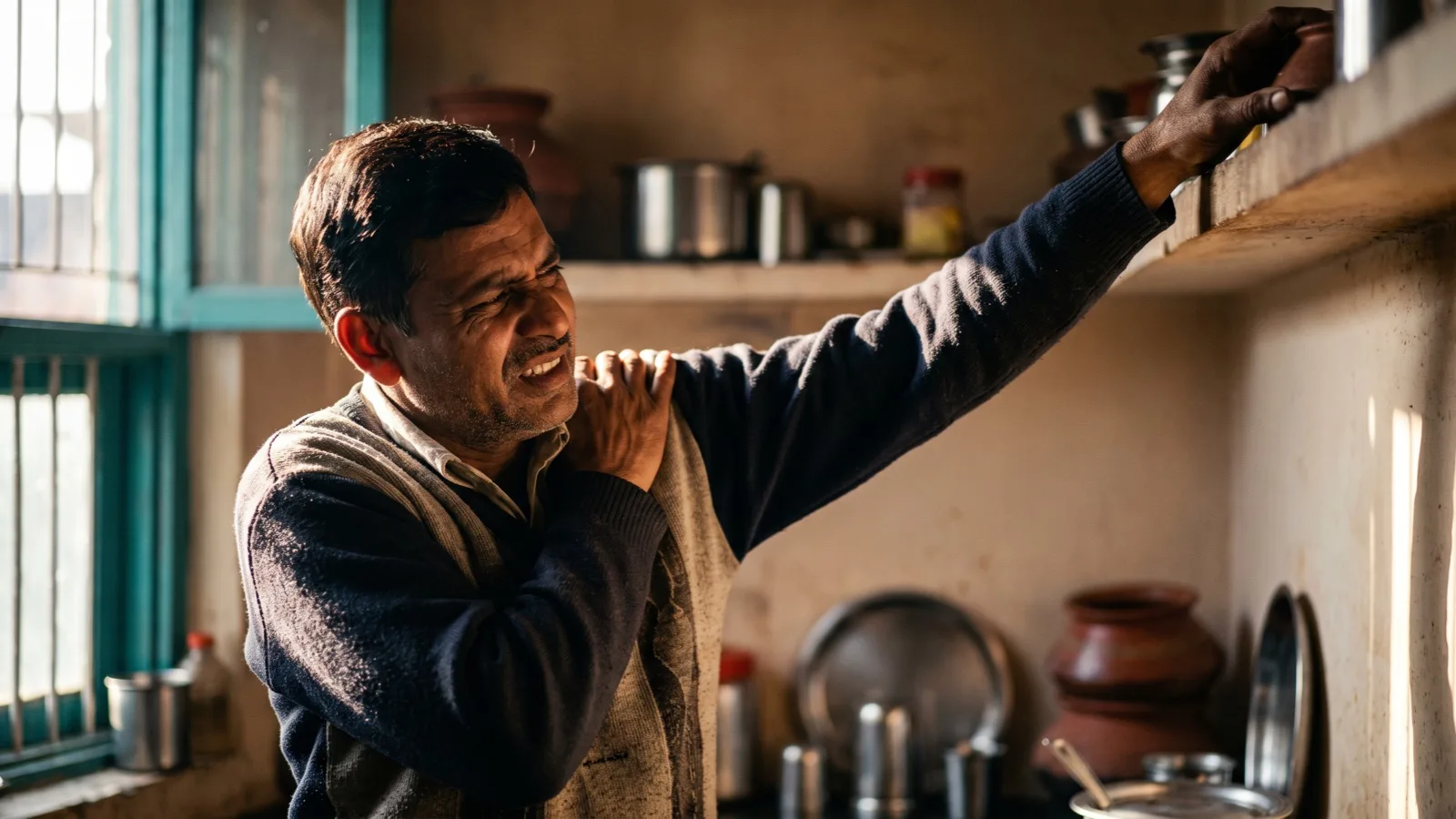
Sciatica is pain that runs from the lower back or buttock down the back of the leg. It follows the path of the sciatic nerve. It is usually felt on one side. People describe it as a sharp, shooting or burning pain. There may also be tingling, pins and needles, or numbness in the leg or foot. Sitting for long periods, bending, coughing or sneezing can trigger it or make it worse. These are the classic slip disc symptoms we hear about in clinic every week.
Sciatica is a symptom, not a diagnosis. Most often it is caused by a slipped disc. It can also come from spinal narrowing (stenosis) or age-related wear.
Causes and risk factors
Discs naturally lose some of their water content and flexibility as we age. This makes them more likely to bulge. On top of that, certain things raise the risk. Heavy or repeated lifting with poor technique is one. Long hours of sitting, including long commutes and desk work, is another. Being overweight, smoking, and a sudden awkward movement or injury all add to it. A largely inactive lifestyle also plays a part, because it weakens the muscles that support the spine.
How is a slipped disc diagnosed?
The diagnosis usually starts with a careful history and examination. Your spine specialist checks your movement, reflexes, sensation and muscle strength. This helps work out which nerve is affected. Many cases are clear from the examination alone. An MRI scan is used when the picture is uncertain, when symptoms are severe, or when surgery is being considered. It gives a detailed view of the discs and nerves and confirms exactly what is happening. X-rays may be used to look at the bones. Imaging is a guide, not the whole story. Many people have disc bulges on a scan with no pain at all. That is why the findings are always read alongside your actual symptoms.
The good news: slipped disc treatment without surgery works for most
This is the most important point in the whole article. Studies and everyday clinical experience both show the same thing. The great majority of slipped discs and episodes of sciatica settle over a few weeks with simple, non-surgical care. The body slowly reabsorbs part of the bulge. The inflammation around the nerve calms down.
Non-surgical treatment usually includes staying gently active rather than strict bed rest. It includes pain-relieving and anti-inflammatory medicine. Physiotherapy strengthens the core and back muscles. You also get guidance on posture and safe movement. Most people are back to their normal life without ever needing an operation. This is the sciatica treatment Sonipat families most often need, and it works.
Warning signs that need urgent attention
A small number of symptoms are different and need to be seen the same day. Go to hospital straight away if you develop weakness in the leg or foot that is getting worse. Do the same for numbness around the inner thighs, buttocks or genitals (the "saddle" area). Any loss of control over your bladder or bowel is also urgent. These can point to serious nerve compression. Rarely, this needs emergency surgery to prevent permanent damage. New severe back pain after a major fall or accident also needs prompt assessment. So does back pain with fever.
When should you see a spine specialist?
It is reasonable to see a spine specialist if your pain is severe. See one if it is not improving after a few weeks of conservative care, or if it keeps coming back. See one if you have leg weakness or numbness. A specialist will examine you and review any scans. They will explain clearly whether your problem is likely to settle on its own or whether further treatment would help. At Memorial Hospital, Sonipat, the spine OPD with Dr. Jitesh Manghwani (MS, DNB) runs on Fridays, 10:00 AM to 12:00 PM, and consultations are arranged by request.
When is surgery actually needed?
Surgery is considered for the minority of patients whose pain is severe and persistent despite proper non-surgical treatment. It is also considered for those with significant or worsening nerve weakness. And it is considered for anyone with one of the emergency warning signs above. When surgery is the right choice, the aim is to take the pressure off the trapped nerve and relieve the leg pain. The decision is always made together with you. We weigh how much the problem is affecting your life against what an operation can realistically achieve.
What you can do at home
Alongside medical treatment, simple habits speed recovery and protect your back for the future. Keep gently active rather than resting in bed for days. Use good lifting technique - bend the knees, keep the load close, and avoid twisting. Set up your work and driving position so the lower back is supported. Take regular breaks from sitting. Heat can ease muscle spasm. As the acute pain settles, do the core and back-strengthening exercises your physiotherapist teaches you. They are the single best way to reduce the chance of another episode. Keeping a healthy weight and not smoking both help your discs stay healthier for longer.
Related reading from our spine team: how to prevent back pain at a desk job with the right setup and exercises, and what to do about knee pain in your 40s and 50s, which often travels with a troubled back.
Frequently asked questions
Will a slipped disc heal on its own?
In most cases, yes. The majority of slipped discs improve over a few weeks with rest from aggravating activities, medicine and physiotherapy. Surgery is needed only for a minority of cases.
Is sciatica a serious condition?
Usually not. Sciatica is most often caused by a slipped disc and settles with conservative care. It becomes urgent only if you develop leg weakness that is worsening, saddle numbness, or loss of bladder or bowel control. Then you should be seen the same day.
Is there a spine surgeon in Sonipat?
Yes. Memorial Hospital has Dr. Jitesh Manghwani (MBBS, MS, DNB), a spine surgeon, with a focused spine OPD on Fridays, 10:00 AM to 12:00 PM. Consultations are by request. Call the hospital or use the appointment request form to confirm a slot.
Should I rest completely with a slipped disc?
No. Long periods of strict bed rest can actually slow recovery. Gentle activity within the limits of your pain, guided by physiotherapy, generally helps you recover faster.
Take the next step
If back or leg pain is interfering with your life, or if you have any of the warning signs above, please be assessed. Read more about our spine care in Sonipat, or request a consultation with Dr. Jitesh Manghwani, MBBS, MS, DNB - the spine OPD runs on Fridays, 10:00 AM to 12:00 PM, by request. For sudden leg weakness or loss of bladder or bowel control, treat it as an emergency and come to the hospital immediately. This article is general information and not a substitute for a consultation.
Medically reviewed by Dr. Jitesh Manghwani, MBBS, MS, DNB (Spine Surgery), Memorial Hospital, Sonipat.
Related specialty: Spine Surgery
Editorial note: This article is for general information and is not a substitute for personal medical advice. Please consult a qualified doctor about your specific symptoms. Last updated on 28 August 2026.