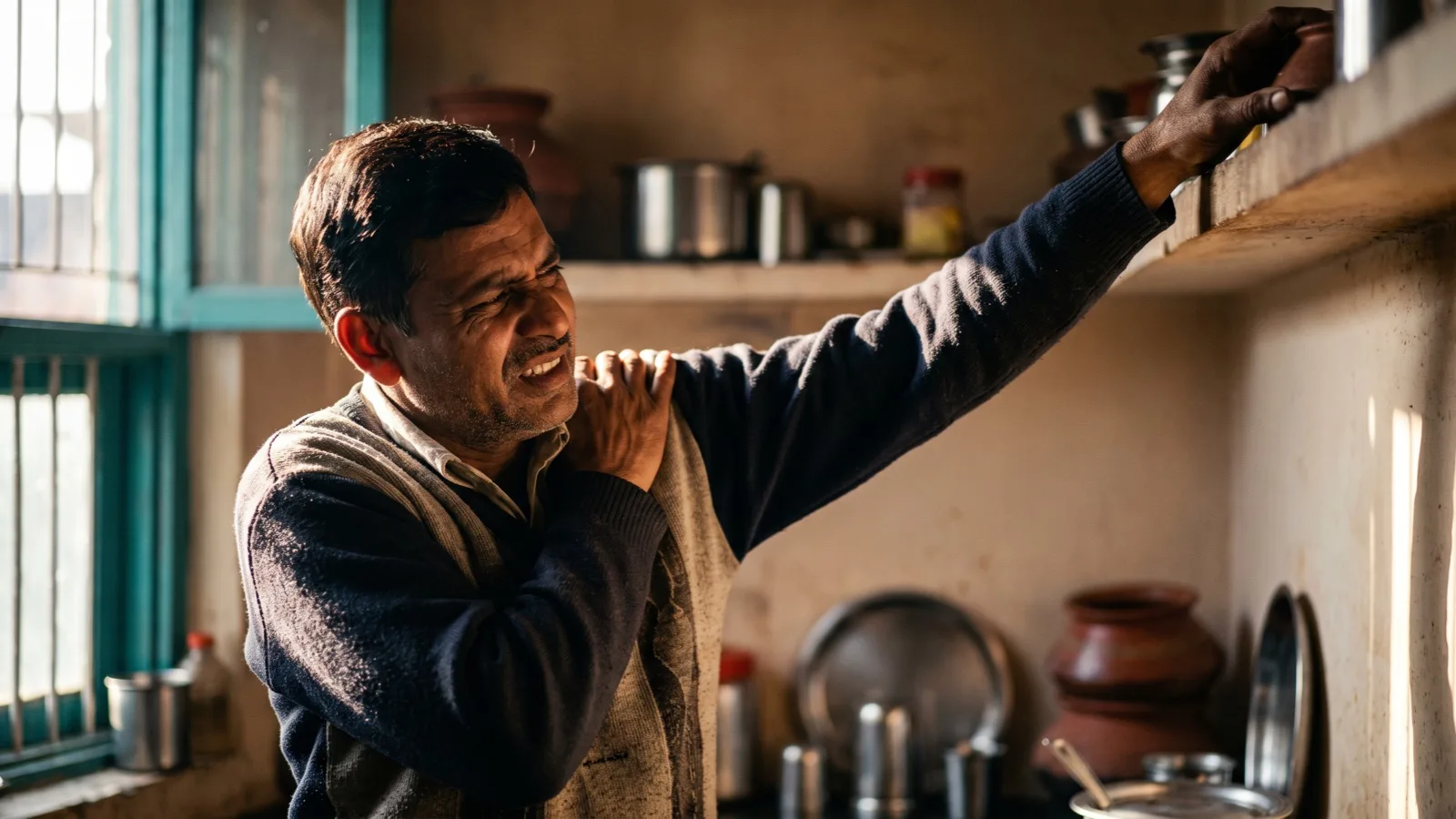




Calcium deficiency almost never announces itself. There is no fever, no lump, nothing to point at. It works quietly for years. Then it presents as a wrist that snaps on an ordinary fall, or a back that has quietly lost an inch of height. The frustrating part is that the early calcium deficiency symptoms were there all along. They are just so ordinary that nobody connects them. This guide from our bone and joint specialists in Sonipat explains what to look for, who is most at risk, and what treatment actually involves.
Why your body never lets calcium run low
Here is the fact that explains everything else. Your blood calcium level almost never drops, even when your diet has been poor for years.
Calcium runs your heart, your nerves and every muscle you own. The body cannot let that level wobble. So when the diet falls short, it simply takes what it needs from the bones. Your skeleton is the reserve tank. The withdrawals are small, silent and constant.
This is why a routine blood test can look perfectly normal while the bones are thinning underneath. A normal serum calcium does not mean your calcium intake is fine. It means your body is doing its job of protecting the blood, using your skeleton to do it.
That is also why the real damage shows up so late. By the time a bone breaks, the withdrawals have been running for a decade or more.
Calcium deficiency symptoms people dismiss
The early signs are vague, and every one of them gets blamed on something else.
Muscle cramps. Night cramps in the calves and thighs, or a foot that seizes up in bed. Most people blame the day's walking or the weather.
Tingling and numbness. A pins-and-needles feeling around the mouth, in the fingertips or the toes. It comes and goes.
Twitching eyelids. A lid that flutters for days. Usually blamed on screens or lack of sleep.
Aching bones. A deep, dull ache in the shins, the hips or the lower back that is hard to point to. It is different from joint pain. It feels like it comes from inside the bone.
Brittle nails and thin, falling hair. Common, and easy to blame on shampoo or water quality.
Tiredness and low mood. Vague, and blamed on everything.
Poor dental health. Teeth that chip easily, or gums that recede early.
Taken one at a time, each of these is nothing. Taken together, in someone whose diet is low in dairy and who rarely sees the sun, they are a pattern worth testing.
The late signs are the ones that bring people to us. A fracture from a fall that should not have broken anything. Height loss. A stoop that develops in the sixties. A back that aches constantly because small spinal bones have quietly compressed.
Calcium deficiency symptoms in females: the extra risk
Women lose bone faster than men, and for reasons no diet fully fixes.
Oestrogen protects bone. It slows the cells that break bone down. At menopause, oestrogen falls sharply, and bone loss accelerates for several years. A woman can lose a striking share of her bone density in the decade around menopause.
Pregnancy and breastfeeding also draw heavily on the mother's calcium, because the baby's skeleton is built from it. Women who have had several pregnancies close together, with poor diet between them, start later life with less in the tank.
Add the common Indian pattern. Many women eat last and least in the household. Many spend little time in direct sunlight. Many cover up outdoors, which is entirely their choice and entirely reasonable, but it does reduce vitamin D made in the skin.
So calcium deficiency symptoms in females often appear earlier and progress faster. Bone density is worth discussing with a doctor around menopause, not after the first fracture.
Calcium is only half the story
You can drink milk all day and still lose bone if vitamin D is low.
Vitamin D is what allows the gut to absorb calcium at all. Without enough of it, most of the calcium you eat passes straight through. Vitamin D deficiency is extremely common across north India, which surprises people in a country this sunny. The reasons are simple: indoor work, covered skin, pollution that filters sunlight, and darker skin, which needs longer exposure to make the same amount.
Magnesium and vitamin K2 matter too, in smaller ways. And thyroid problems can affect bone turnover, which is one reason we often test thyroid alongside bone health.
The practical point: testing calcium alone tells you very little. Vitamin D, and sometimes a parathyroid hormone level, tell the real story.
Treatment for calcium deficiency
Treatment is straightforward, but it must be based on tests rather than guesswork.
Food first, always. Milk, curd, paneer and buttermilk are the richest sources. For those who avoid dairy, the Indian kitchen has plenty: ragi, sesame seeds, almonds, amaranth, drumstick leaves, spinach, and small fish eaten with the bones. Ragi is the quiet hero here. It carries more calcium per serving than most grains anyone eats.
Sunlight. Direct sun on the arms and face, for fifteen to twenty minutes, in the mid-morning or late afternoon, several days a week. Through glass does not count. Under sunscreen does not count.
Supplements when tests show they are needed. Doses of calcium and vitamin D are set by your doctor, based on your levels, your age and your other conditions. This is not a "more is better" situation. Excess calcium supplementation can cause kidney stones and other problems, which is exactly why it should not be self-prescribed from a chemist's counter.
Weight-bearing exercise. Bone responds to load. Walking, stair climbing and simple resistance work tell the skeleton to hold onto its density. Swimming is wonderful for joints but does far less for bone.
Treat the cause. Sometimes low calcium points to something else, such as a parathyroid problem, coeliac disease or a medication effect. Those need their own treatment.
Bone health care at Memorial Hospital, Sonipat
Bone and joint concerns here are seen by Dr. Anurag Mittal, MBBS, MS (Orthopaedics), fellowship trained in knee and shoulder arthroplasty and sports medicine at Seoul National University Hospital, South Korea. OPD runs Monday to Saturday, 12:30 to 1:30 PM, with appointments by request. The in-house laboratory handles calcium, vitamin D, thyroid and kidney testing, so the full picture comes back together rather than in pieces across weeks. X-ray is on site. Where bone thinning is suspected, the assessment covers fracture risk, not just a number on a report, and the plan is matched to your age and stage of life. Ongoing knee pain in your forties and unexplained bone aches are both worth bringing to the same visit.
Frequently asked questions
What are the first signs of calcium deficiency?
Muscle cramps, especially at night, along with tingling in the fingers or around the mouth, twitching eyelids, brittle nails and a deep ache in the bones. Each one alone means little. Together, in someone with a low-dairy diet and little sun exposure, they are worth testing for.
Can a blood test show calcium deficiency?
Not reliably on its own. The body pulls calcium from bone to keep blood levels normal, so serum calcium often reads fine while bone is thinning. A useful assessment includes vitamin D, and often thyroid and parathyroid levels, with bone density testing where the risk is high.
How much calcium do adults need daily?
Most adults need around 1,000 mg a day, and women after menopause and older adults generally need more. Your doctor sets the target for you. Food should supply as much of it as possible, with supplements added only when tests show a gap.
Does calcium deficiency cause joint pain?
Not directly. Calcium deficiency causes bone pain, which is a deeper, duller ache than joint pain. But low vitamin D, which usually travels with it, does cause widespread muscle and joint aching, so the two are often tangled together and worth testing as a pair.
Get the full picture, not one number
Bones give very little warning, and the first clear signal is often a fracture that should never have happened. Cramping, bone aches, or a family history of early fractures are all good reasons to test. Request an orthopaedic consultation with Dr. Anurag Mittal, OPD Monday to Saturday, 12:30 to 1:30 PM, and have calcium, vitamin D and thyroid checked together. This article is general information and not a substitute for a consultation.
Medically reviewed by Dr. Anurag Mittal, MBBS, MS (Orthopaedics), Fellowship in Knee & Shoulder Arthroplasty (Seoul National University Hospital), Memorial Hospital, Sonipat.
Related specialty: Orthopaedics & Joint Replacement
Editorial note: This article is for general information and is not a substitute for personal medical advice. Please consult a qualified doctor about your specific symptoms. Last updated on 28 August 2026.