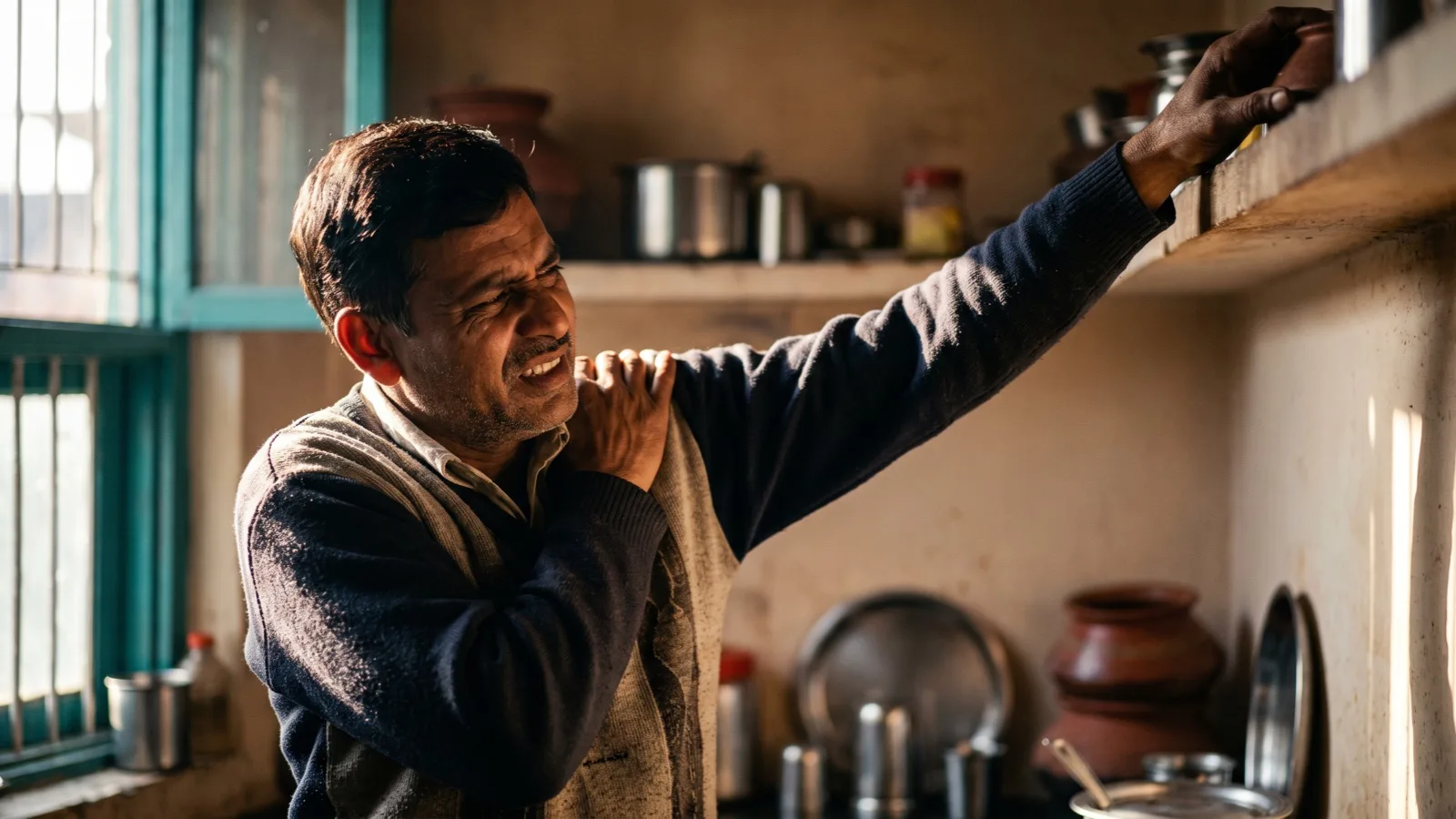



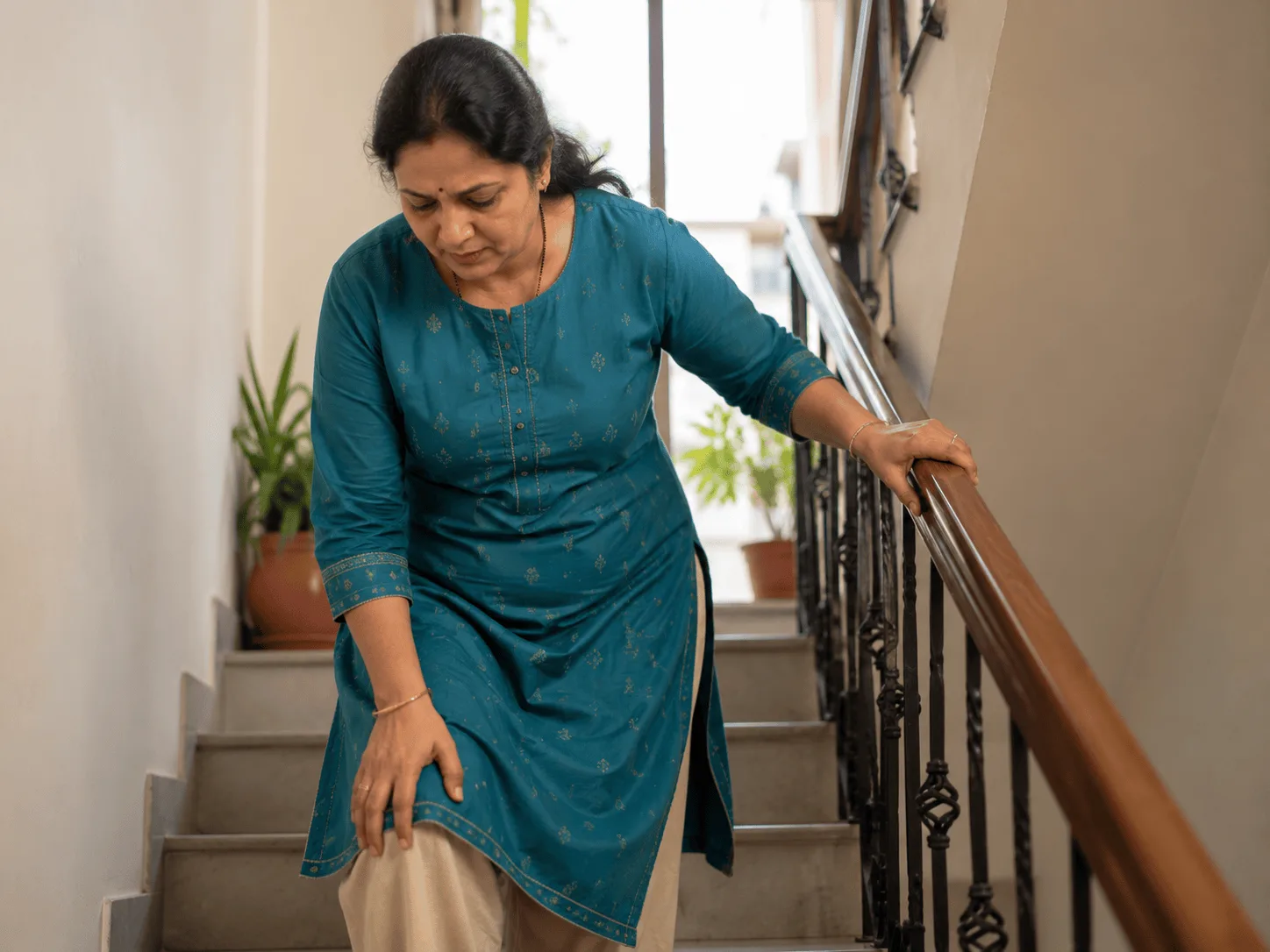
The first complaint is usually the stairs. Somewhere in the mid-40s, knees that carried you quietly for decades begin to speak up. A twinge on the way down. An ache after sitting cross-legged. A stiffness on standing that takes a few steps to ease. It pays to understand knee pain causes at age 40 to 55. What you do in this decade largely decides how your knees behave in the next two. This guide from our orthopaedic and joint care in Sonipat team explains what is going on inside the joint, and what truly helps.
Why knees start complaining in the 40s
The knee is the body's largest joint. It also carries the most load. Every step puts several times your body weight through it. Stairs and squatting multiply that further. Its working surface is cartilage. This is a smooth, white layer that absorbs shock. It has no nerve supply of its own. And, crucially, it has almost no ability to regrow.
Through the 40s, three slow changes come together. Cartilage thins a little with decades of use. The muscles that protect the knee weaken unless you work them on purpose. The thigh's quadriceps matter most here. And body weight tends to creep up. Now add the deep squatting, cross-legged sitting and floor-level living built into Indian daily life. Add old sports or accident injuries from the 20s. The mid-life knee has plenty of reasons to grumble.
Knee pain causes at age 40 and beyond
Early osteoarthritis is the most common reason. This is the start of wear in the joint surface. You usually feel it as pain with activity and short-lived stiffness. It shows up earlier in our population than in the West. Deep-squatting lifestyles and higher rates of knock-knee alignment play a part.
Patellofemoral pain is pain behind or around the kneecap. It is worst on stairs, slopes and after long sitting. It is very common in the 40s and very treatable with the right exercises.
Meniscus tears. The knee's C-shaped cushions can tear with a twist or a squat. In this age group they sometimes tear with no memorable injury at all. Catching, locking, or pain on twisting are the clues.
Inflammatory arthritis - rheumatoid and similar conditions - behaves differently. It brings swelling and long morning stiffness. It often affects both knees, or other joints too. Gout comes from uric acid crystals. It causes sudden, hot, severely painful attacks. Both need specific medical treatment, not just painkillers.
Pain from the hip or spine can also pose as knee pain. That is one reason a proper exam beats self-diagnosis.
Early arthritis signs to take seriously
Watch for this pattern. Pain that starts with activity and eases with rest. Stiffness after sitting that loosens within minutes of walking ("start-up" pain). A grating or crunching feeling, which doctors call crepitus. Swelling after a heavy day, and growing trouble with squatting and cross-legged sitting. Some signals are stronger. Morning stiffness that lasts beyond half an hour. Night pain. A knee that locks or gives way. These deserve an orthopaedic opinion, not another month of putting up with it.
A simple two-week diary helps a great deal at your first visit. Note which activities flare the pain. Note how long morning stiffness lasts. Note whether the knee swells by evening. That pattern tells an orthopaedic surgeon more than any single test. It shows what is happening inside the joint and how urgently it needs attention.
Knee arthritis treatment: what actually helps
The honest headline: at this stage, the most powerful treatments are not tablets.
Weight matters more than anything. Each kilogram lost takes roughly four kilograms of load off the knee with every step. Losing even four to five kilograms makes a real difference in daily pain.
Strong thighs protect knees. The quadriceps muscle is the knee's natural shock absorber. Simple, steady exercises measurably reduce arthritis pain. Think straight-leg raises, wall sits, and slow sit-to-stand repeats. A physiotherapist can set the programme. Your discipline runs it.
Modify activity, don't stop it. Walking, cycling and swimming keep the joint nourished and the muscles strong. What deserves cutting back is deep squatting, long cross-legged sitting and stair-heavy routines during painful phases. Use a chair and a Western-style toilet where possible.
Use medicines briefly and sensibly. Short courses of pain relievers help flare-ups. But daily self-medication for months harms the stomach and kidneys. It also hides the problem instead of treating it. Hot fomentation eases stiff mornings. Ice calms a swollen evening knee.
Be sceptical of miracle supplements. Nothing in a jar regrows cartilage. Money spent there is better spent on a weighing scale and a physiotherapist.
When to see an orthopaedic doctor
See an orthopaedic doctor in Sonipat if knee pain lasts beyond about six weeks despite sensible self-care. Come earlier if you notice locking, giving way, night pain, or visible deformity. A hot swollen joint or fast-worsening symptoms also mean come now. Early assessment is not a slippery slope to surgery. It is how surgery is usually avoided. Alignment, muscle strength and activity are corrected while the joint still has cartilage worth protecting. For torn cartilage and ligament problems, arthroscopy (keyhole surgery) treats the damage through tiny cuts. For the few whose arthritis is already advanced, we have covered knee replacement: who needs it and what to expect separately.
Knee care at Memorial Hospital, Sonipat
Knee patients at Memorial Hospital are seen by Dr. Gaurav Singhla, MBBS, MS (Orthopaedics), FHKR. He is an orthopaedic surgeon with fellowship training in joint replacement and arthroscopy from Toronto, Canada. Assessment is organised in-house: examination, X-rays and, where needed, further imaging. Treatment covers the full range. That means structured physiotherapy plans, injections where they fit, arthroscopy, and joint replacement for advanced arthritis. Please call the hospital for current OPD timings and to plan a consultation.
Frequently asked questions
Why do my knees hurt at 40 when X-rays look normal?
Early cartilage softening, kneecap tracking problems and weak thigh muscles all cause real pain before anything shows on an X-ray. That is actually good news. This is the stage where exercise, weight control and activity changes work best. A clinical exam tells more than the X-ray at this age.
Is walking good or bad for knee pain?
Good, in almost every case. Regular walking keeps cartilage nourished and muscles strong. Joints stiffen and weaken when rested for weeks. What upsets mid-life knees is deep squatting, long cross-legged sitting and repeated heavy stair work. Change those, keep the walk.
Does knee pain at this age mean I will need a knee replacement?
Usually not. Most people who act in their 40s do well for decades, or for good. That means strengthening, weight control and sensible activity. Replacement is kept for advanced arthritis that has exhausted conservative care, usually much later in life.
Which doctor should I see for knee pain in Sonipat?
An orthopaedic specialist. At Memorial Hospital, Dr. Gaurav Singhla (MBBS, MS Orthopaedics, FHKR Canada) assesses and treats the full range of knee problems. That runs from early arthritis exercises to arthroscopy and joint replacement. Call the hospital for current OPD timings.
Act in this decade, not the next
Knees rarely fail suddenly. They send a decade of polite reminders first. Answer them: call Memorial Hospital for Dr. Singhla's current OPD timings, or send an appointment request online. This article is general information and not a substitute for a consultation.
Medically reviewed by Dr. Gaurav Singhla, MBBS, MS (Orthopaedics), FHKR (Canada), Memorial Hospital, Sonipat.
Related specialty: Orthopaedics & Joint Replacement
Editorial note: This article is for general information and is not a substitute for personal medical advice. Please consult a qualified doctor about your specific symptoms. Last updated on 15 August 2026.