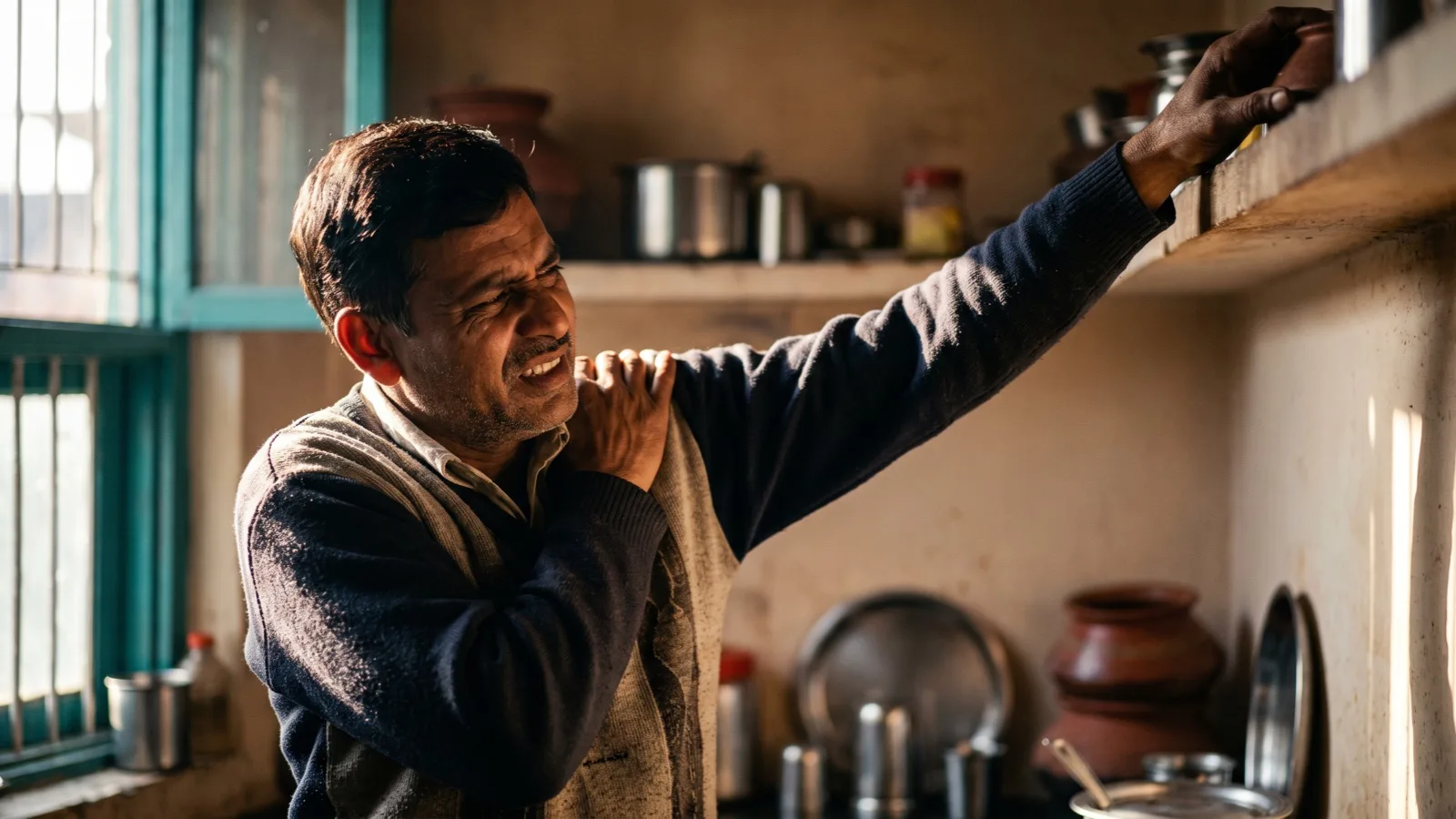



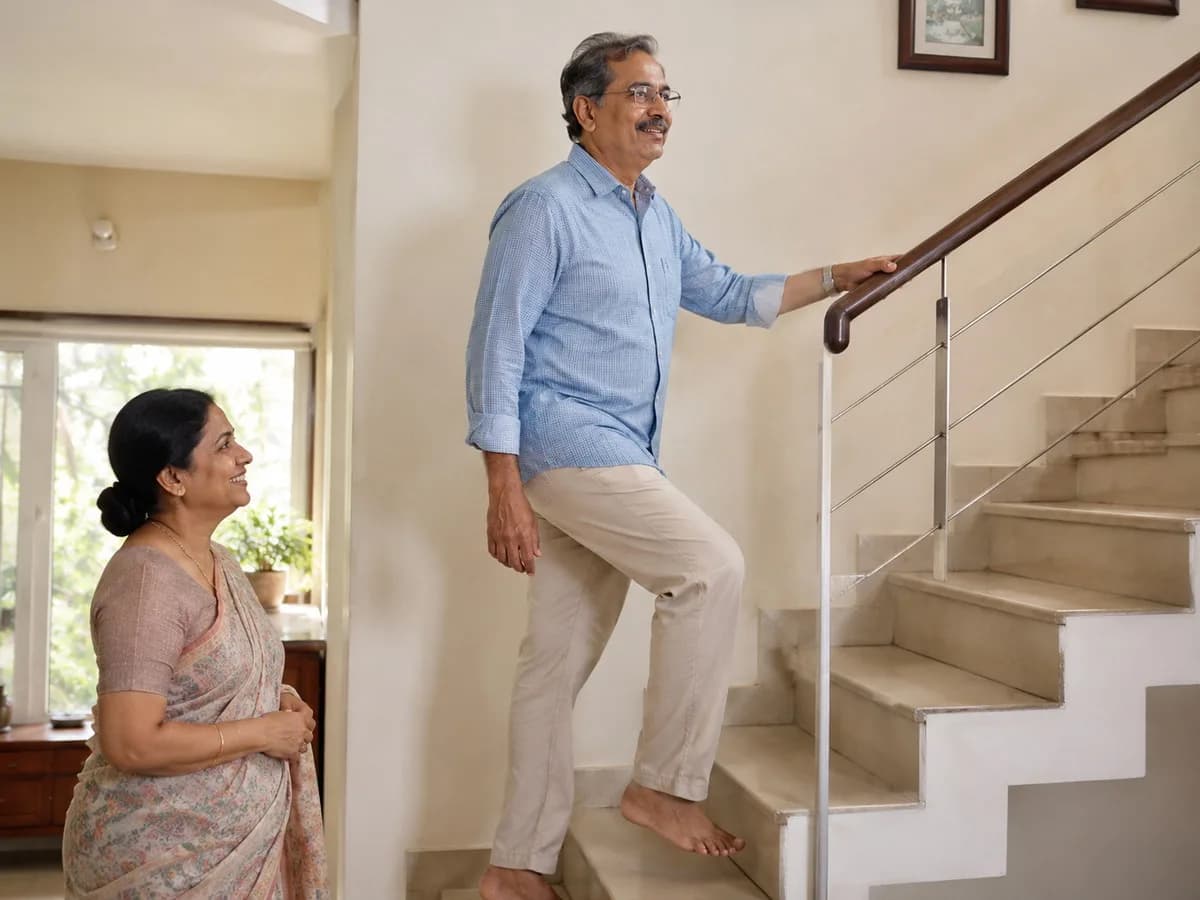
Hip replacement and knee replacement are two of the most successful operations in modern bone and joint surgery. Every year they give millions of people back their walking, free of pain. Yet in most Indian homes the two get bundled into one frightening word: "replacement". The differences that actually matter never get discussed. This honest hip vs knee replacement guide comes from our joint replacement team in Sonipat. It walks you through who needs which operation, how the two recoveries differ, what the risks really are, and what daily life looks like on the other side.
Two different joints, two different stories
The hip is a ball-and-socket joint, buried deep inside muscle. It is stable by design and built to carry weight. In India it usually fails for reasons that differ from the knee. One is avascular necrosis, in which the ball of the joint loses its blood supply and dies. It often strikes surprisingly young men. It is linked to long steroid courses or heavy drinking. Other causes are inflammatory arthritis and childhood hip disease that catches up in adult life. Then there are hip fractures in older people. A broken hip after a bathroom fall is one of the commonest reasons for urgent replacement after 70.
The knee is a shallower hinge, and it lives a harder life. Indian knees live the hardest life of all. Decades of squatting, sitting cross-legged and floor-level living grind them down, often on bowed alignment. So wear-and-tear knee arthritis is far more common here than hip arthritis. The story usually starts as ordinary knee pain in your 40s and 50s. It then creeps ahead over years. That is why knee replacement outnumbers hip replacement many times over in Indian operation theatres.
Both operations do the same basic thing. The worn, bone-on-bone joint surface is shaved away. Smooth metal and plastic parts take its place. Neither one removes the whole bone. "Replacement" really means resurfacing the damaged ends.
Both also share the same golden rule. Surgery is for the stage when pain rules your whole day, in spite of a fair trial of medicines, physiotherapy and weight control. A surgeon confirms that stage by examining you and by standing X-rays. The report alone is never enough.
Hip vs knee replacement: how the recovery differs
Here is the comparison patients rarely hear plainly. Of the two, hip recovery is usually the easier one. Surgical pain settles fast. The deep ache of arthritis goes almost at once. Most patients say the new hip "feels normal" within weeks.
Walking starts the day of surgery or the day after. Walkers give way to a stick in two to three weeks. By six weeks most people move smoothly again. The main early task is care with position, not exercise. For the first few weeks you avoid extreme positions, such as deep low squats or crossing the operated leg tightly. That gives the tissue around the new ball and socket time to heal.
A new knee asks more of you. Walking begins just as early, on the day of surgery or the day after. But the result is earned over six to twelve weeks of steady bending and straightening exercises. A new knee has to be actively taught to move again. Patients who do their physiotherapy honestly get excellent, near-natural knees. Patients who skip it risk stiffness that no surgeon can rub away later.
Swelling and warmth also last longer around a new knee. The odd click is normal and harmless. In short, the hip forgives and the knee tests you. Knowing that in advance is half the preparation. Our guide to knee replacement in Sonipat sets out the full journey, week by week.
Joint replacement recovery shares the same milestones for both joints. You stand and walk within a day. You climb stairs before you go home. Most home routines come back by six weeks. Near-full activity follows by three months. Physiotherapy drives every one of those steps. Bed rest does not.
Risks, compared honestly
Both operations are safe and well refined. But their risks have a different flavour. The hip's signature risk is dislocation in the early weeks, when the ball slips out of its socket. That is exactly why those position rules matter. There is also a small chance of a leg-length difference. It is usually minor and usually settles with time.
The knee's signature risk is stiffness when rehab is neglected. A new knee also takes longer to feel truly "yours". Some numbness near the scar is common and harmless.
A few risks are shared: infection, blood clots, and the implant loosening over the years. Modern operation theatres, single-dose antibiotic protocols, early walking and blood-thinning steps hold them low. Controlling diabetes and stopping smoking before surgery lower them further. None of these risks matches the certain, daily disability of a worn-out joint left untreated.
Outcomes and life afterwards
Modern implants routinely serve 15 to 20 years or more. Both operations score among the highest patient-satisfaction ratings in all of surgery. The hip is famous for it. The knee is close behind when rehab is respected.
Life afterwards is happily ordinary: walking, stairs, temple visits, travel, swimming, cycling. What both joints want you to retire is deep floor-level living. Full squats and long cross-legged sitting strain a new joint. Chair-and-commode living suits it far better. That is a talk worth having with the family before surgery, not after.
If a hip and a knee are both failing, the surgeon usually stages the two operations. The joint that limits life most goes first. If both knees are equally worn, doing both in one anaesthesia is an option for fit patients.
Joint replacement at Memorial Hospital, Sonipat
For hip replacement in Sonipat as well as knee replacement, Memorial Hospital's service is led by Dr. Gaurav Singhla, MBBS, MS (Orthopaedics), FHKR. He is an orthopaedic surgeon with fellowship training in hip and knee replacement and arthroscopy from Toronto, Canada.
The whole work-up runs under one roof: examination, standing X-rays and pre-operative fitness checks. Surgery is done in the hospital's modular operation theatre, with 24×7 anaesthesia and ICU backup. Physiotherapy-led recovery is planned before the operation, not improvised after it. Please call the hospital for current OPD timings and to plan a consultation.
Frequently asked questions
Which is harder to recover from, hip or knee replacement?
Knee replacement generally asks more of you. Both let you walk within a day, but a new knee needs six to twelve weeks of steady bending exercises to reach its best. A new hip mostly needs care with position while it heals. With honest physiotherapy, both do very well by about three months.
How long do hip and knee implants last?
Modern implants routinely last 15 to 20 years or more, and many outlive their owner's need for them. Keeping weight in check helps, as does staying active with joint-friendly exercise. Avoid repeated deep squats. If an implant does wear out years later, revision surgery is available.
Can I sit cross-legged or squat after joint replacement?
Occasional cross-legged sitting may be possible after some knee replacements. But routine deep squats and long floor sitting are best given up after either operation. They strain the implant, and in the hip's early weeks they risk dislocation. A chair, a cot and a Western-style toilet help a new joint last longest.
Who performs hip and knee replacement in Sonipat at Memorial Hospital?
Dr. Gaurav Singhla (MBBS, MS Orthopaedics, FHKR) performs both operations at Memorial Hospital, Sonipat. He is fellowship-trained in hip and knee replacement in Toronto, Canada. The hospital offers in-house pre-operative work-up, a modular operation theatre and physiotherapy-led recovery. Call the hospital for current OPD timings.
Decide with information, not fear
A worn-out joint does not get better by waiting. The operation that fixes it is among the most reliable in medicine. If hip or knee pain now writes your daily schedule, send an appointment request or call Memorial Hospital for Dr. Singhla's current OPD timings. Turn that frightening word into a plan. This article is general information and not a substitute for a consultation.
Medically reviewed by Dr. Gaurav Singhla, MBBS, MS (Orthopaedics), FHKR (Canada), Memorial Hospital, Sonipat.
Related specialty: Orthopaedics & Joint Replacement
Editorial note: This article is for general information and is not a substitute for personal medical advice. Please consult a qualified doctor about your specific symptoms. Last updated on 28 August 2026.