

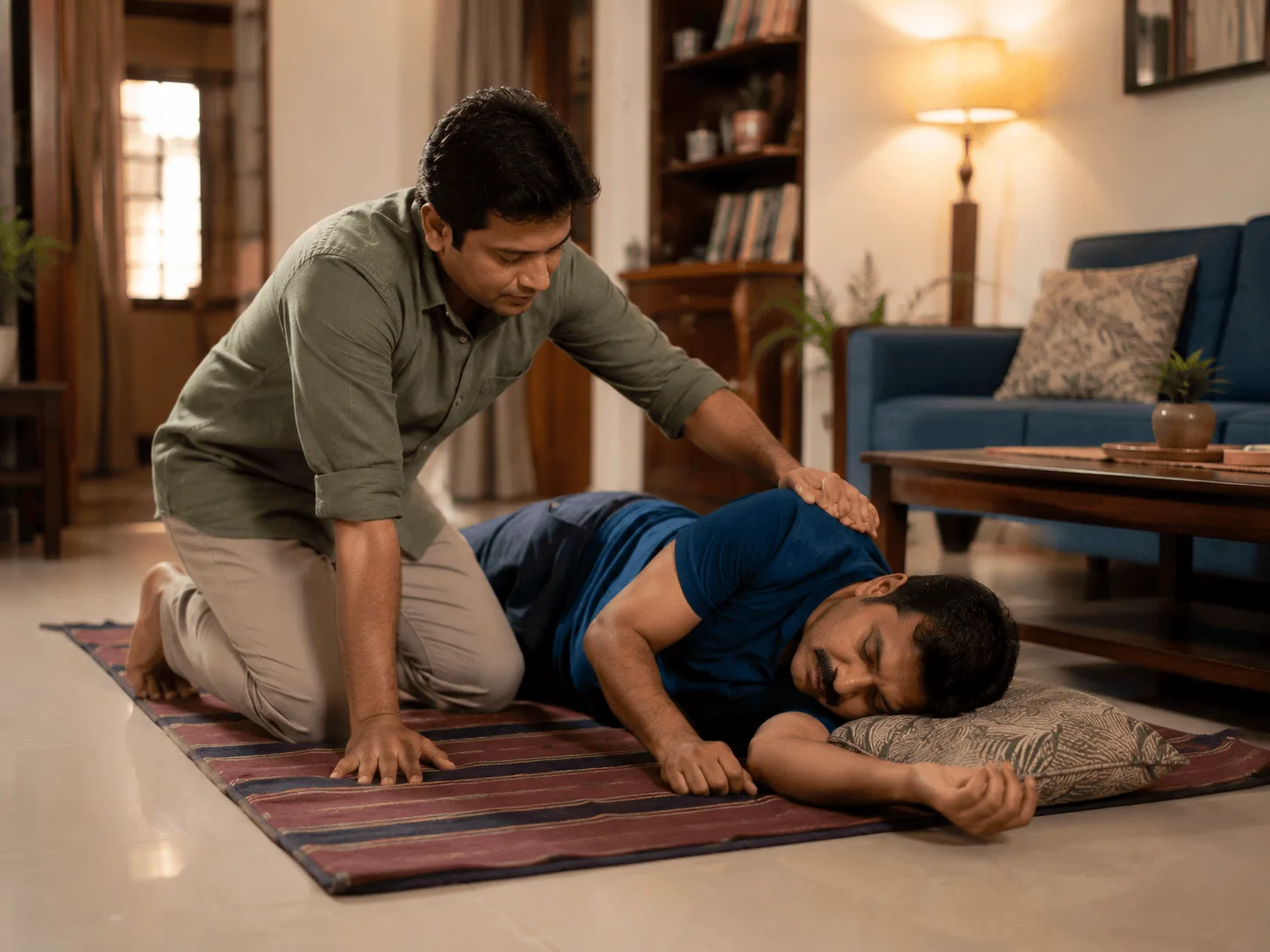
Picture it. Someone near you suddenly falls, stiffens, and starts jerking. They do not know where they are. What you do in the next five minutes matters a great deal. Correct seizure first aid is simple. But most of what people in India have learned about it is wrong, and some of it is harmful. This guide from our neurology care in Sonipat team covers three things. The first aid that truly helps. The myths that need to go. And how modern epilepsy treatment lets most patients live fully normal lives.
What a seizure actually is
A seizure is a sudden burst of abnormal electrical activity in the brain. How it looks depends on where in the brain the burst happens. Some seizures are dramatic. The person collapses, goes stiff, and the whole body jerks in a rhythm. Others are surprisingly subtle: a blank stare for a few seconds, lip-smacking, or fumbling with clothes. Some are just a short spell of confused behaviour the person does not remember at all.
Epilepsy is the condition of having repeated seizures with no clear trigger. It is one of the most common brain disorders. India alone has millions of people living with it, and it can begin at any age. One seizure does not automatically mean epilepsy. Fever in children, very low sugar, alcohol withdrawal and several other triggers can cause a one-off seizure. That is exactly why a proper check after a first seizure matters so much.
Seizure first aid: what to do, step by step
Stay calm and stay with the person. Most seizures stop on their own within one to three minutes. Your job is not to stop the seizure, because nothing you do can. Your job is to keep the person safe while the brain resets.
Note the time. Timing the seizure is the single most useful thing a bystander can do. Under five minutes: stay and protect. Over five minutes: emergency.
Protect the head. Ease the person to the ground if they are falling. Put something soft under the head - a folded dupatta, a bag, even your palm will do. Move away sharp furniture, hot vessels, and anything else they could strike.
Turn them onto their side once the jerking allows it, with the mouth pointing slightly down. This keeps the airway clear and lets saliva drain out instead of being breathed in.
Loosen anything tight around the neck, remove spectacles, and let the seizure finish. Afterwards the person will be confused and drowsy. Speak gently and tell them what happened. Stay until they are fully alert or help arrives.
What never to do during a seizure
Never put anything in the mouth. Not a spoon, not fingers, not water. A person having a seizure cannot swallow their tongue. That is a myth, and the anatomy simply does not allow it. Objects in the mouth break teeth and get breathed in. Fingers get badly bitten.
Never try to pin down or hold the jerking limbs. Holding them down causes injuries and does nothing to shorten the seizure. Do not crowd around the person. Do not offer food, water or medicines until they are fully awake. And do not press onions, shoes or leather to the nose. It does nothing except waste minutes and keep an old superstition alive.
When a seizure is an emergency
Come straight to the emergency department - Memorial Hospital's runs 24×7 - if the seizure lasts more than five minutes. Come if a second seizure begins before the person fully recovers. Come if the person is pregnant, diabetic or injured. Come if the seizure happened in water. Come if breathing does not return to normal. And come if this is a first-ever seizure. Knowing which hospital can handle it before the night arrives saves minutes.
A first seizure always deserves a same-day medical check, even when recovery seems complete. One more thing to watch for: sudden weakness or a drooping face afterwards is not typical of a seizure. That should make you think of stroke warning signs instead.
Epilepsy myths in India that need to go
Few conditions carry more unfair baggage in our society than epilepsy. The epilepsy myths India still whispers cause more suffering than the seizures do.
Epilepsy is not possession, madness, or the result of past deeds. It is a brain condition, as physical as diabetes. It is not contagious in any way. A child with epilepsy belongs in school. An adult with controlled epilepsy can work, marry and raise children. Hiding the diagnosis from a future spouse's family is sadly common. It only delays care and damages trust. Women with epilepsy can have safe pregnancies with proper planning. Medicines are adjusted, not stopped, with a doctor's help. None of this stigma survives contact with the medical facts.
How modern epilepsy treatment works
Diagnosis starts with the story. What happened before, during and after the episode? An eyewitness account helps most. If someone has a mobile video of an episode, bring it - it is genuinely useful. Tests then support the picture. An EEG records the brain's electrical rhythm. Brain imaging looks for a structural cause. Along the way, we rule out conditions that mimic seizures. These range from fainting to certain migraine and other headache conditions.
The treatment itself is quietly excellent news. With the right anti-seizure medicine taken regularly, the large majority of people with epilepsy become seizure-free or very nearly so. The medicine must be taken daily and never stopped abruptly. Stopping suddenly can trigger dangerous clusters of seizures. Alongside medicines, three habits help: regular sleep, limited alcohol, and not skipping meals. Together these cut down on breakthrough seizures. For epilepsy treatment in Sonipat, checks and long-term follow-up can be arranged through Memorial Hospital's physician OPD, with neurologist input as needed.
Neurology care at Memorial Hospital, Sonipat
Seizure emergencies at Memorial Hospital are handled by the 24×7 emergency team. Admission, monitoring and in-house CT imaging are available when needed. Specialist opinions come from Dr. VP Hooda, MBBS, MD, DM (Neurology), a DM-qualified neurologist who consults for admitted and referred patients. Since he does not run a walk-in OPD, please call the hospital to check neurologist consultation availability. For ongoing epilepsy care, the daily physician OPD keeps treatment on track between specialist reviews. That covers prescription reviews, dose changes and blood tests.
Frequently asked questions
What is the correct first aid for a seizure?
Time the seizure and protect the head with something soft. Clear hard objects away and turn the person onto their side as soon as you can. Stay with them until they are fully alert. Do not put anything in the mouth, do not hold the limbs down, and do not give food or water until they are fully awake.
When should a seizure patient be taken to hospital?
Go at once if the seizure lasts over five minutes or repeats before full recovery. Go at once if it involves injury, water, pregnancy or diabetes, or if breathing seems abnormal afterwards. A first-ever seizure should always be checked the same day, even if the person seems fine afterwards.
Can epilepsy be treated in Sonipat?
Yes. Memorial Hospital provides emergency seizure care 24×7 and in-house EEG-supportive evaluation pathways. Neurology input comes from Dr. VP Hooda (MBBS, MD, DM) for admitted and referred patients - call the hospital to check his consultation availability. Routine follow-up runs through the daily physician OPD.
Can a person with epilepsy live a normal life?
With regular treatment, most do. The majority of patients get excellent seizure control with medicines alone. Study, work, marriage and parenthood are all realistic goals. The main rules are simple: take medicine daily, sleep enough, and never stop treatment without medical advice.
Share the facts, not the fear
Correct seizure first aid and honest information protect people far better than superstition ever has. Has someone in your family had a seizure, first or fifth? Then book a physician consultation to arrange a proper check, or call Memorial Hospital to check neurologist consultation availability. This article is general information and not a substitute for a consultation. A first-ever seizure in an adult always needs brain imaging afterwards, for the reasons set out in our guide to brain tumor symptoms.
Medically reviewed by Dr. VP Hooda, MBBS, MD, DM (Neurology), Memorial Hospital, Sonipat.
Related specialty: Neurology
Editorial note: This article is for general information and is not a substitute for personal medical advice. Please consult a qualified doctor about your specific symptoms. Last updated on 7 September 2026.