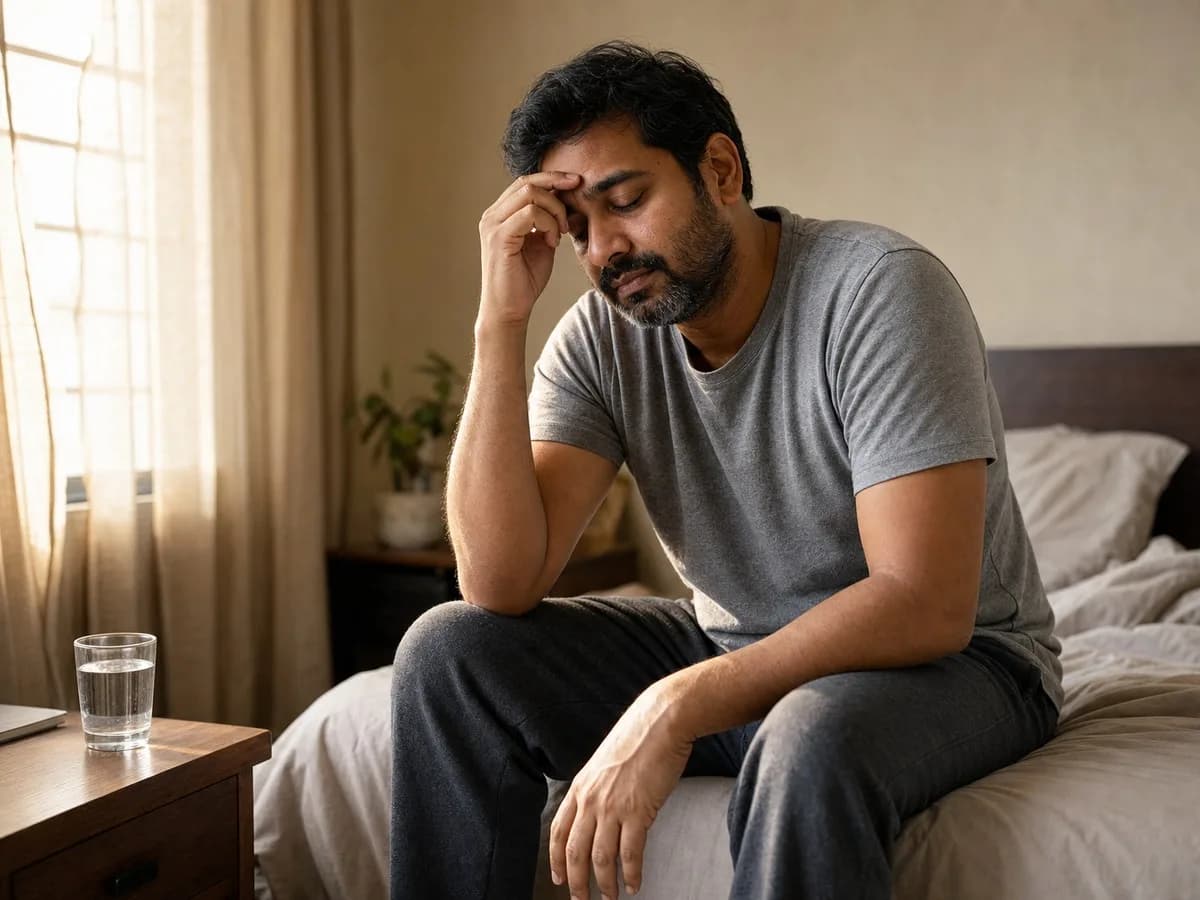
A stroke is one of the few medical emergencies where what you do in the first hour can change the rest of someone’s life. Too often, families in Sonipat wait - hoping the weakness or slurred speech will pass, or trying home remedies first. With a stroke, that wait is the most dangerous decision of all - knowing the stroke warning signs, and acting on them, is the single most powerful thing a family can do. This guide from our neurology team in Sonipat explains what a stroke is, the simple FAST test to spot one, why speed matters, and exactly what to do.
What is a stroke?
A stroke happens when the blood supply to part of the brain is suddenly cut off. Brain cells need a constant supply of oxygen-rich blood; when that supply stops, the cells in that area begin to die within minutes. There are two main types. An ischaemic stroke, the most common, is caused by a clot blocking a blood vessel. A haemorrhagic stroke is caused by a blood vessel bursting and bleeding into the brain. Both are emergencies, and only a doctor and a brain scan can tell them apart - which is exactly why you must get to hospital, not guess at home.
The FAST test - learn it by heart
The easiest way to recognise a stroke is the word FAST. Each letter is a sign to check.
F - Face
Ask the person to smile. Has their face drooped on one side? Is the mouth or eye pulled down?
A - Arms
Ask them to raise both arms. Is one arm weak, or does it drift downwards? They may be unable to lift it at all.
S - Speech
Ask them to repeat a simple sentence. Is their speech slurred or jumbled? Are they unable to find words, or unable to understand you?
T - Time
If you see any one of these signs, it is Time to call for help and get to hospital immediately. Note the time the symptoms started - the medical team will need it.
Other warning signs
Besides the FAST signs, a stroke can also cause sudden numbness or weakness on one side of the body, sudden confusion, a sudden severe headache with no known cause, sudden trouble seeing in one or both eyes, or sudden dizziness and loss of balance. The common word is "sudden". Any sudden loss of a brain function should be treated as a stroke until proven otherwise.
Why acting fast matters
During a stroke, around two million brain cells can be lost every minute that treatment is delayed. For a clot-type stroke, there are treatments that can break up or remove the clot and restore blood flow - but they only work within a short window of a few hours from when symptoms began. The sooner the person reaches hospital, the more brain can be saved, and the better the chances of recovering speech, movement and independence. Arriving early can be the difference between walking out of hospital and a lifelong disability.
This is why you should never "wait and watch", never lie the person down to sleep it off, and never spend time on home remedies. Call for help and go straight to a hospital that can assess and image the brain.
What to do if you suspect a stroke
Stay calm and act quickly. Call the hospital’s emergency number or arrange the fastest transport to hospital. Note the time symptoms started. Do not give the person anything to eat or drink, as swallowing may be affected. Keep them comfortable and reassured while help arrives. At Memorial Hospital, Sonipat, suspected stroke is handled through our 24×7 emergency service, with rapid assessment and intensive care support.
What is a TIA (mini-stroke)?
Sometimes the stroke warning signs appear and then fade away within minutes or a few hours, leaving no lasting weakness. This is called a transient ischaemic attack, or TIA - often nicknamed a mini-stroke - and it is caused by a brief interruption of blood supply to the brain. A TIA is a serious warning sign, not a false alarm: it means a full stroke could follow, sometimes within days. Never ignore symptoms just because they pass. If you have had a TIA, you should be assessed promptly so the cause can be found and treatment started to prevent a full stroke.
Stroke care and recovery at Memorial Hospital, Sonipat
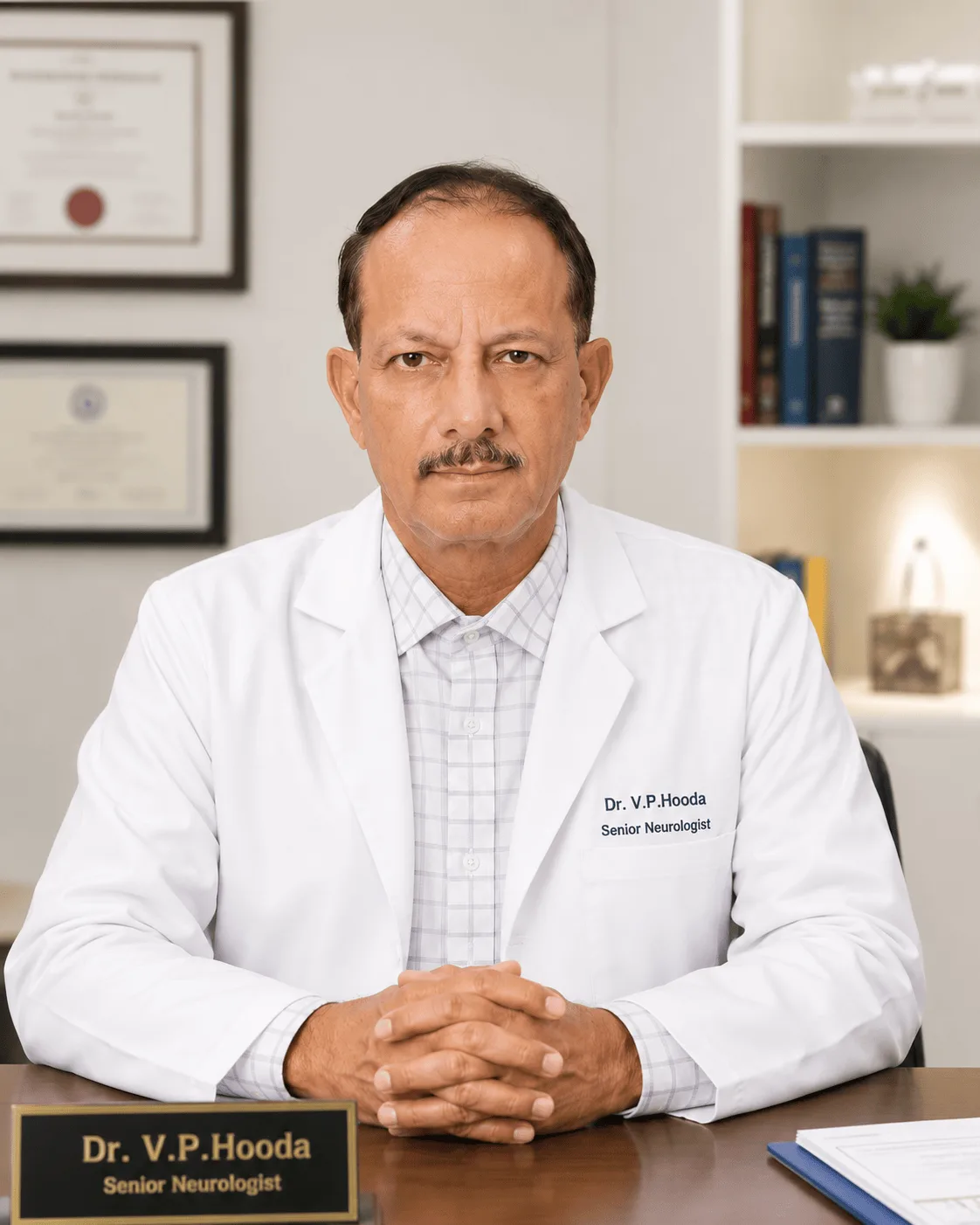
Memorial Hospital provides emergency assessment, in-hospital care and ICU support for stroke patients, with neurology input from Dr. VP Hooda (MD, DM), a DM-qualified neurologist. After the emergency phase, recovery is a journey - and a lot can be regained. Rehabilitation focuses on restoring movement, speech and daily function, alongside treatment to control the risk factors (blood pressure, diabetes, cholesterol and irregular heartbeat) that cause strokes, so a second one is far less likely. Family members play a vital part too - encouraging exercises, helping with medicines and watching for any new symptoms. With patience, support and consistent treatment, many stroke survivors regain a great deal of their independence over the months that follow.
Can stroke be prevented?
To a large extent, yes. The biggest risk factors - high blood pressure, diabetes, smoking, high cholesterol, an irregular heartbeat and an inactive lifestyle - are all things that can be checked and managed. Controlling blood pressure alone dramatically lowers stroke risk. A simple medical check-up can identify your risks and put a prevention plan in place.
If you have already had a stroke or a TIA, prevention matters even more, because the risk of another is higher. Taking the medicines you are prescribed exactly as advised, attending follow-up appointments, and keeping your blood pressure, sugar and cholesterol in range together make a second stroke far less likely. Small, consistent steps - a daily walk, less salt, stopping smoking - add up to powerful protection for your brain.
Related reading from our neurology team: how to tell a migraine from an ordinary headache, the correct first aid for seizures, and when vertigo and dizziness point to the brain rather than the ear.
Frequently asked questions
What should I do if someone shows stroke signs?
Treat it as an emergency. Use the FAST test, note the time symptoms started, and get the person to hospital immediately - call our 24×7 emergency line. Do not wait for symptoms to pass and do not give food or water.
Is there a neurologist in Sonipat for stroke care?
Yes. Memorial Hospital has Dr. VP Hooda (MBBS, MD, DM), a DM-qualified neurologist, who supports stroke and other neurological care alongside the hospital’s 24×7 emergency and ICU services.
Can a stroke be treated if we reach hospital quickly?
Yes - and speed is everything. For clot-type strokes there are treatments that can restore blood flow, but they work only within a few hours of symptoms starting. The earlier you arrive, the more brain can be saved.
How can I lower my risk of a stroke?
Control blood pressure, diabetes and cholesterol, do not smoke, stay active, and have an irregular heartbeat checked. A routine check-up at Memorial Hospital can assess these and set up a prevention plan.
Take the next step
Share the FAST test with your family - one day it may save a life. To assess and manage your stroke risk factors (blood pressure, sugar and cholesterol), you can book a check-up at Memorial Hospital. To learn more, see our neurology care in Sonipat, and call the hospital to check consultation availability with Dr. VP Hooda, MBBS, MD, DM. And if you ever see the signs of a stroke, do not wait - call our 24×7 emergency line immediately. This article is general information and not a substitute for a consultation.
Medically reviewed by Dr. VP Hooda, MBBS, MD, DM (Neurology), Memorial Hospital, Sonipat.
Related specialty: Neurology
Editorial note: This article is for general information and is not a substitute for personal medical advice. Please consult a qualified doctor about your specific symptoms. Last updated on 28 August 2026.