



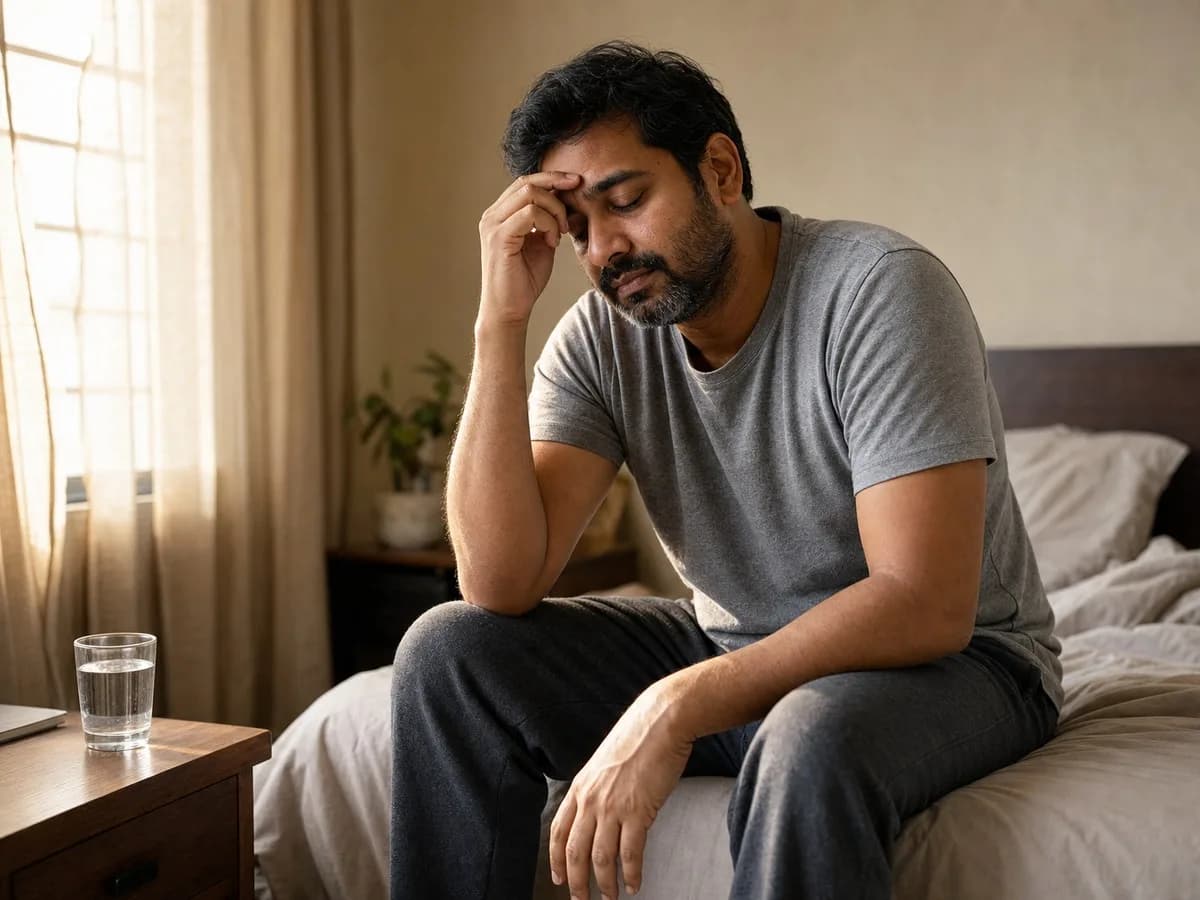
Almost every headache is harmless. That is the honest place to start, and it is exactly why the rare dangerous one slips through. People blame work pressure, screens, poor sleep, the weather. They are usually right. But a small number of headaches behave differently, and the difference is recognisable if you know what to look for. This guide from our neurosurgery team in Sonipat sets out the brain tumor symptoms that show up early, the ones that get explained away for months, and the specific patterns that justify a scan.
Read it as reassurance first. Almost nobody who reads this has a tumour.
Why the early signs get dismissed
The brain sits inside a sealed box of bone. There is no spare room. So a growth causes symptoms in two ways: by raising the pressure inside that box, or by pressing on the particular patch of brain it happens to sit next to.
That second point explains why there is no single list of symptoms. A growth near the area controlling speech causes word-finding trouble. Near the movement area, weakness down one side. Near the vision pathways, a blind patch. The same size of growth in a quiet region may cause nothing at all for a long time.
And because the early symptoms are ordinary in isolation, they get attributed to ordinary things. Tiredness, stress, age, phones. Usually correctly. That is the trap.
The headache that is actually different

Most people with a brain tumour do get headaches at some point, but headache alone is a poor signal, since almost everyone gets headaches. What matters is the pattern.
Worse in the early morning, easing as the day goes on. Lying flat overnight raises pressure inside the skull. A headache that is at its worst on waking and settles after an hour or two upright is the classic description, and it is the opposite of a tension headache, which usually builds through the day.
Worse on coughing, sneezing, straining or bending forward. All of these briefly raise pressure inside the head.
A headache that wakes you from sleep.
Getting steadily worse, week on week, rather than coming and going.
Coming with vomiting, often without much nausea beforehand, and sometimes relieving the headache briefly.
New in someone over fifty who has never been a headache person. A brand-new headache pattern in mid-life deserves more attention than a lifelong one.
A brain tumor headache is rarely the only sign by the time it is persistent. It usually travels with one of the symptoms below. Our guide to migraine and ordinary headaches covers the far commoner causes, and the great majority of readers will find their answer there.
Brain tumor symptoms beyond headache
These are the ones people most often blame on stress.
A first-ever seizure in an adult. This is the single most important item on the page. A fit in someone who has never had one, past the age of twenty-five or so, needs imaging of the brain. It does not usually mean a tumour, but it always needs investigating. Our guide to seizure first aid covers what to do in the moment.
Personality or behaviour change. Family notice this long before the patient does. Someone becomes uncharacteristically irritable, flat, disinhibited or apathetic. It gets called depression, stress, or simply getting older.
Memory and concentration slipping in a way that is new and progressive.
Weakness, clumsiness or numbness on one side that develops over weeks. Dropping things, a foot catching on steps, handwriting deteriorating.
Speech trouble. Reaching for words, or muddling them.
Vision changes. Blurring, double vision, or losing a segment of the visual field. Bumping into door frames on one side. Opticians sometimes spot raised pressure at the back of the eye before anything else.
Unsteadiness and loss of balance, especially with growths at the back of the brain.
Hearing loss or ringing in one ear only. One-sided is the part that matters.
The common thread is that these come on gradually and keep progressing, over weeks to months. That distinguishes them from a stroke, where the same symptoms arrive suddenly, in minutes. Sudden weakness, drooping face or slurred speech is a medical emergency and a different pathway entirely, covered in our stroke warning signs guide.
How it is diagnosed

An examination comes first. A neurosurgeon checks strength, sensation, reflexes, balance, coordination, speech and vision, and looks into the back of the eye for signs of raised pressure. That alone tells an experienced clinician a great deal.
Imaging settles it. A CT scan is fast, widely available and good at picking up a mass, bleeding or fluid build-up, so it is often the first test, especially in an emergency. An MRI shows far more detail and is the standard for looking properly at brain tissue. Where a growth is found, a biopsy or the surgery itself provides the tissue that identifies exactly what it is.
The word tumour also needs unpacking, because it frightens people more than it should. Many brain growths are benign. Meningiomas, which arise from the covering layers rather than the brain itself, are common, slow, and often curable by removal. Some are found incidentally and simply watched with repeat scans. Others are cancerous and need surgery, radiotherapy and sometimes chemotherapy together. Two people with the word tumour in their report can face completely different situations.
Neurosurgery at Memorial Hospital, Sonipat
Neurosurgical assessment here is with Dr. PK Gupta, MBBS, MS, M.Ch (Neurosurgery), trained at NIMHANS, Bangalore, with an FRCS from Glasgow and more than fifty published papers. OPD runs Monday, Wednesday and Friday, 4 to 5 PM. In-house CT, X-ray and laboratory services mean the first round of investigation happens without sending you elsewhere, and MRI is arranged and reviewed with neurosurgical input where the picture calls for it. ICU and 24×7 emergency cover sit behind the service for anyone who arrives acutely unwell with raised pressure or a first seizure. Where a case is better served by a specialist tertiary centre, that referral is made honestly and quickly rather than delayed.
Frequently asked questions
What are the first signs of a brain tumor?
Usually a new, progressive headache that is worst in the early morning and eases through the day, or a first-ever seizure in an adult. Gradual weakness on one side, personality change noticed by family, new speech difficulty, or one-sided vision or hearing loss are the others. The pattern that matters is gradual onset that keeps worsening over weeks.
How is a brain tumor headache different from a normal headache?
A tension headache typically builds through the day and eases with rest. A raised-pressure headache is worst on waking, improves after an hour or two upright, worsens on coughing, sneezing or bending, may wake you from sleep, and gets steadily worse week by week. Vomiting alongside it, especially without nausea first, adds to the concern.
Should I get a scan for my headaches?
Most headaches need no scan at all. A scan is warranted for a headache with the raised-pressure pattern above, a headache with new neurological symptoms such as weakness, speech or vision change, a first seizure in an adult, a sudden thunderclap headache, or a brand-new headache pattern after fifty. A doctor's examination decides this better than a checklist.
Are all brain tumours cancer?
No. Many are benign, grow slowly and are curable by removal, and meningiomas are a common example. Some are found by chance and just monitored with repeat scans. Others are malignant and need combined treatment. The type, size and position matter far more than the word itself.
When the pattern fits, get it checked
Almost every headache is harmless, and the point of this article is not to frighten anyone out of that. But a headache worst on waking that is getting worse each week, a first seizure in an adult, or gradual one-sided weakness are patterns that earn a proper examination. Request a neurosurgery consultation with Dr. PK Gupta, OPD Monday, Wednesday and Friday, 4 to 5 PM. For a sudden severe headache, a first fit, or sudden weakness or speech loss, use the 24×7 emergency department straight away. This article is general information and not a substitute for a consultation.
Medically reviewed by Dr. PK Gupta, MBBS, MS, M.Ch (Neurosurgery), FRCS (Glasgow), Memorial Hospital, Sonipat.
Related specialty: Neurosurgery
Editorial note: This article is for general information and is not a substitute for personal medical advice. Please consult a qualified doctor about your specific symptoms. Last updated on 7 September 2026.