



If you are looking for kidney stone treatment in Sonipat, here is the most reassuring fact. Almost every stone can be treated. Today, most are removed without a single large cut. Kidney stones are one of the most common urinary problems in Sonipat and across Haryana. The searing pain they cause sends many people to the emergency room each year. This guide from our urology department in Sonipat explains what kidney stones are and how to spot them. It also covers why they form, when to see a urologist, and how we treat them at Memorial Hospital.
What is a kidney stone?
A kidney stone is a hard, crystal-like deposit that forms inside the kidney. It builds up when certain minerals and salts in the urine become too concentrated. Stones can be as small as a grain of sand or as large as a marble. A small stone may travel down the urinary tract and pass out in the urine on its own. A larger stone can get stuck. It may lodge in the kidney, in the ureter (the narrow tube that carries urine to the bladder), or in the bladder. There it blocks the flow of urine. That blockage is what causes the sudden, severe pain for which stones are known.
Stones are very common. Once you have had one, you are more likely to form another. That is why both prompt treatment and long-term prevention matter.
Symptoms and warning signs
The classic symptom is renal colic. This is a sudden, intense pain in the side and back, just below the ribs. It often comes in waves and may spread to the lower belly and groin. The pain can be so severe that it is hard to sit still. It does not ease, whatever position you try.
There are other warning signs too. Blood in the urine, which may look pink, red or brown. A burning feeling when passing urine. An urgent and frequent need to pass urine. Cloudy or foul-smelling urine, and nausea or vomiting are also common. If a stone causes an infection, you may also get fever and chills. This combination needs urgent medical attention. An infected, blocked kidney can become dangerous very quickly.
Why kidney stones form
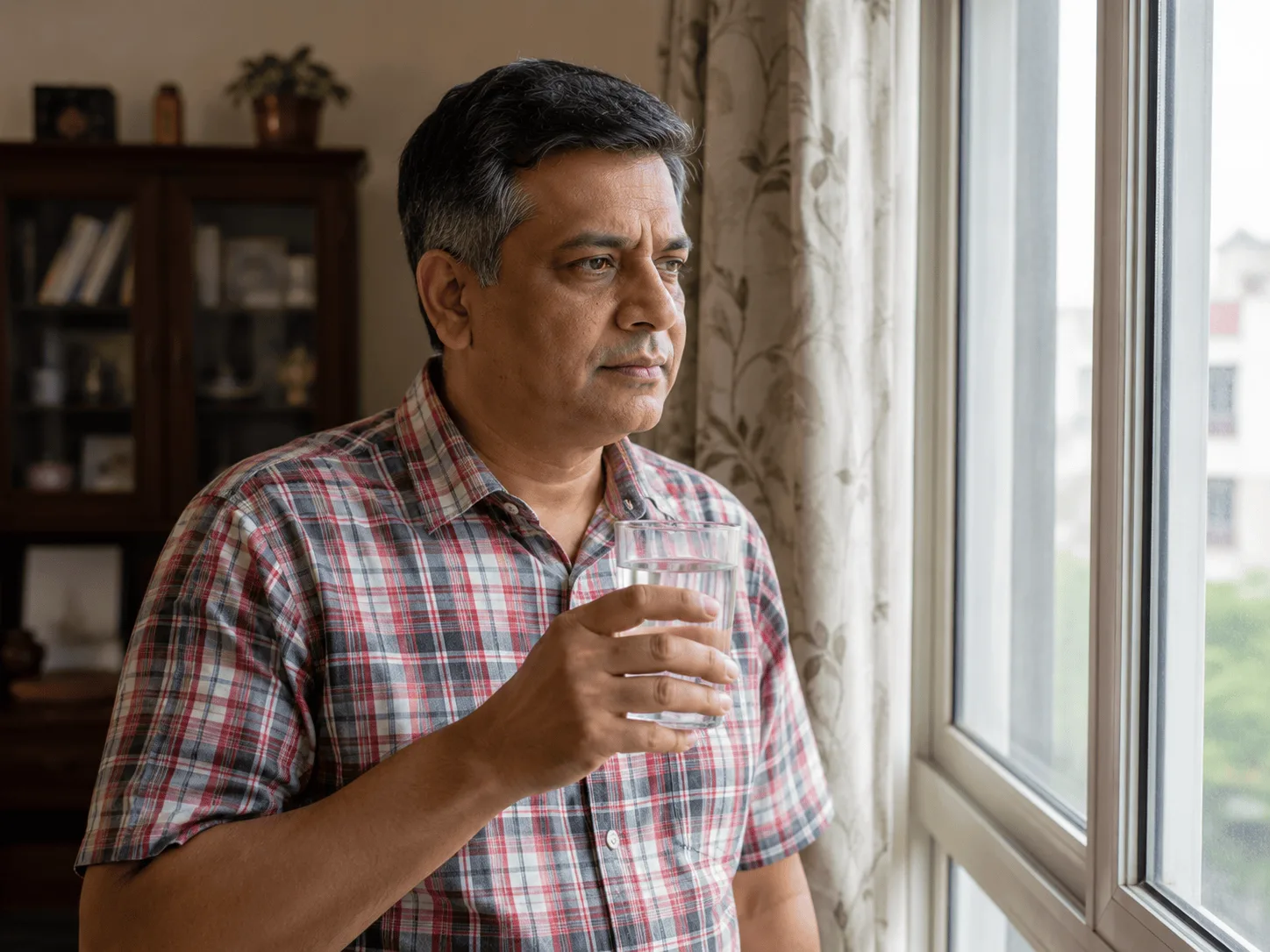
Stones form when the balance of water and minerals in the urine is disturbed. The single biggest risk factor is not drinking enough water. This matters most in Haryana's hot summers. Fluid is lost through sweat, and the urine becomes concentrated. The more concentrated the urine, the more easily crystals form and grow.
Other risk factors include a diet high in salt and animal protein. Being overweight, a family history of stones, and repeated urinary infections also raise the risk. So do certain medical conditions such as gout. Some people simply have a tendency to form stones. They need to be more careful with water intake and diet than others.
When should you see a urologist?
See a urologist promptly if you have severe or lasting pain in the side or back. The same goes for blood in your urine, or trouble passing urine. Even a single painless episode of blood in the urine should always be checked. It can have causes beyond stones that need attention.
Go to the emergency department at once if pain comes with fever and chills. Go too if you are vomiting and cannot keep fluids down, or if you are passing very little or no urine. These can signal a blocked, infected kidney, which is a medical emergency. At Memorial Hospital, severe stone pain is seen through our 24×7 emergency service. The urology OPD runs Monday to Saturday, 10:30 AM to 1:30 PM, for checks and planned treatment.
How is a kidney stone diagnosed?
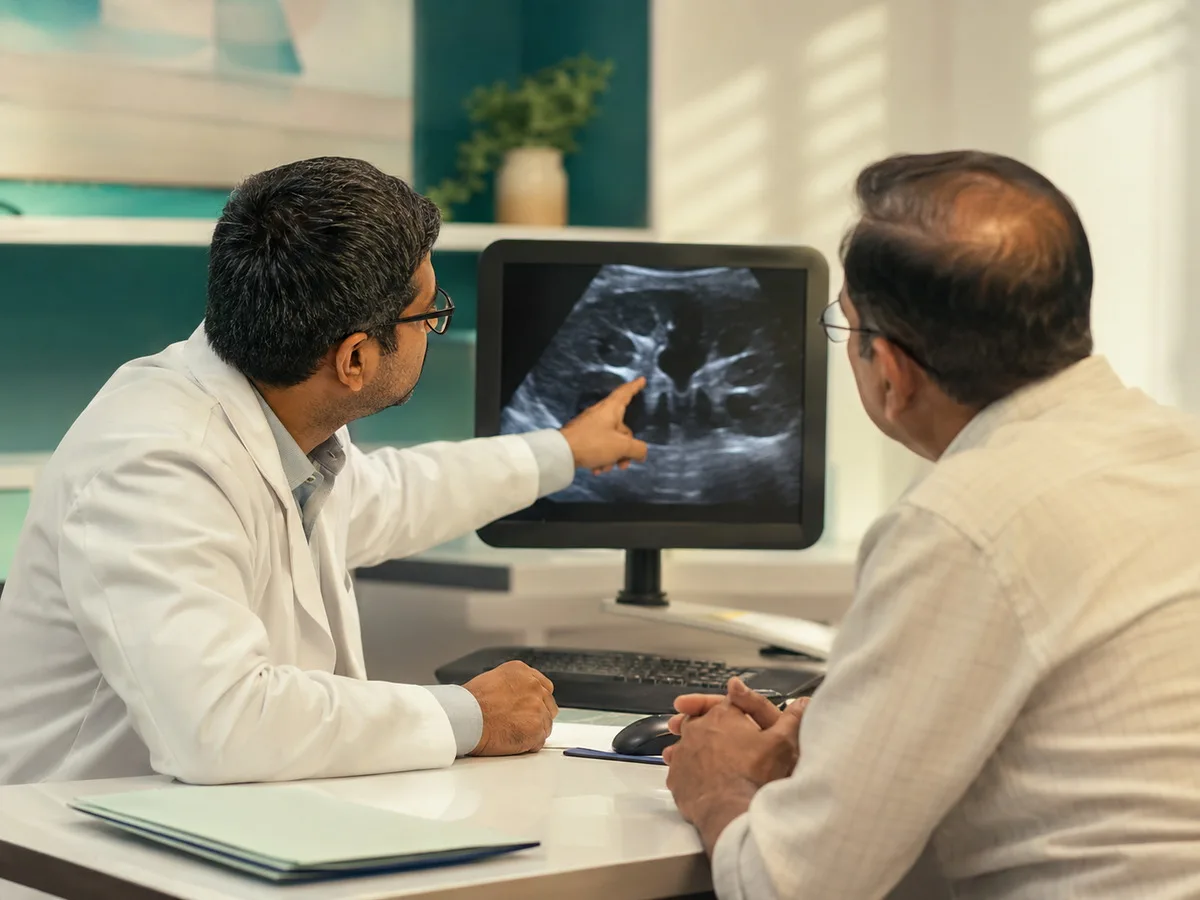
When you arrive with stone symptoms, the diagnosis is usually confirmed quickly. An ultrasound of the abdomen can show a stone and any swelling of the kidney. It is safe and widely available. A CT scan gives the clearest picture of a stone's exact size and position. It is often used to plan treatment. A urine test checks for infection and blood. Blood tests show how well the kidneys are working. At Memorial Hospital, we have in-house ultrasound, X-ray and lab facilities. So this whole check can usually be done in a single visit. There is no delay between finding the problem and planning the right treatment for you.
Kidney stone treatment in Sonipat at Memorial Hospital
Treatment depends on the size and position of the stone. Small stones are often managed without surgery. You get plenty of fluids, pain relief and medicine that relaxes the urinary tract to help the stone pass. Larger stones, or stones that are stuck or causing infection, need to be removed.
Our kidney stone doctor in Sonipat is Dr. Gaurav Singh Randhawa (M.Ch Urology). He specialises in endo-urology. This means minimally invasive, scope-based surgery done without large open cuts. He has carried out more than 10,000 such procedures. The main techniques are described below.
Ureteroscopy (URS) and RIRS. A thin scope is passed up the urinary tract to reach the stone. The stone is then broken up with a laser and removed. RIRS (retrograde intrarenal surgery) reaches stones inside the kidney itself. There are no external cuts, and most patients recover quickly. Dr. Randhawa has performed over 3,000 ureteroscopy procedures.
PCNL (percutaneous nephrolithotomy). For larger kidney stones, a small keyhole is made in the back. The stone is then removed directly through a scope. It is the standard treatment for big or complex stones. Dr. Randhawa has performed over 3,000 PCNL procedures. Because the cut is tiny, recovery is far quicker than after old-style open surgery.
Whichever method is used, the goal is the same. Clear the stone, protect the kidney and get you back to normal life as fast as possible, with the least discomfort.
Preventing future stones
After a stone, simple steps cut the risk of another. Drink enough water through the day so your urine stays pale. In Haryana's climate that often means two to three litres. You need more in summer or if you work outdoors. Reduce salt, eat less animal protein, and keep to a healthy weight. If you form stones again and again, your urologist can test the stone and your urine. This finds the specific cause, so a prevention plan can be tailored for you.
Related reading from our urology team: why kidney stone cases spike in Haryana's summers, what blood in the urine can mean beyond stones, and the prostate symptoms men over 50 should not ignore.
Frequently asked questions
Do all kidney stones need surgery?
No. Many small stones pass on their own with plenty of fluids and medicine. A scope procedure or surgery is needed mainly for larger stones. It is also needed for stones that are stuck, or that cause infection or blockage.
Is kidney stone surgery painful?
Modern stone treatment is minimally invasive and done under anaesthesia. So the procedure itself is not painful. There may be mild discomfort afterwards, which settles quickly. Most patients are surprised how soon they are back to normal.
Which doctor treats kidney stones in Sonipat?
A urologist treats kidney stones. At Memorial Hospital, Sonipat, Dr. Gaurav Singh Randhawa (M.Ch Urology) has performed more than 10,000 endo-urology procedures. The urology OPD runs Monday to Saturday, 10:30 AM to 1:30 PM.
Can kidney stones come back?
Yes. Once you have had a stone, you are more likely to form another. But good hydration and simple changes to your diet greatly reduce the risk.
Take the next step
If you have stone symptoms, do not wait for the pain to become unbearable. Learn more about our kidney stone specialist in Sonipat, or book an appointment with Dr. Gaurav Singh Randhawa, MBBS, MS, M.Ch (Urology) - OPD Monday to Saturday, 10:30 AM to 1:30 PM. For sudden severe pain with fever, or if you cannot pass urine, call our 24×7 emergency line straight away. This article is general information and not a substitute for a consultation.
Medically reviewed by Dr. Gaurav Singh Randhawa, MBBS, MS, M.Ch (Urology), Memorial Hospital, Sonipat.
Related specialty: Urology
Editorial note: This article is for general information and is not a substitute for personal medical advice. Please consult a qualified doctor about your specific symptoms. Last updated on 28 August 2026.