


Few sights scare a person faster than red urine. And few symptoms are brushed off faster once it stops. "It was only once." "There was no pain." "It must be the heat." Here is the medical truth. All blood in urine causes deserve a proper answer. And the painless kind is the one a urologist worries about most. This guide from our urology specialists in Sonipat covers the seven common culprits. It explains what the colour patterns mean, and exactly what the check-up looks like.
What counts as blood in the urine?
Doctors call it hematuria, and it comes in two forms. Visible (gross) hematuria is the kind you can see. The urine is pink, red, or the colour of cola or strong tea. Microscopic hematuria is invisible. It turns up on a routine urine test, often during a health check-up. Both count. Both need an explanation.
One check first: colour is not always blood. Beetroot, some medicines and some food colours can tint urine red-pink. And the dark yellow urine of dehydration is often mistaken for blood in a Haryana summer. A simple urine test settles the question in minutes. That is exactly why guessing is not needed.
The 7 common blood in urine causes
1. Urinary tract infection. This is the most common cause, especially in women. You get burning, frequency, urgency and sometimes visible blood. It responds well to the right antibiotic course. "Right" is the key word here, because half-courses breed resistant germs.
2. Kidney and bladder stones. Stones scrape the urinary lining as they move. That produces blood, with the classic wave-like pain in the flank. Some stones, though, bleed without much pain at all. Our guide to kidney stone treatment covers how modern stone removal works without open surgery.
3. Prostate enlargement. In men over fifty, the surface blood vessels of an enlarged prostate get stretched, and they can bleed. This usually comes with the weak stream and night-time urination of prostate enlargement. It still needs a check to confirm the prostate is the whole story.
4. Hard exercise or injury. Heavy exertion, long-distance running, or a blow to the back or lower belly can each cause short-lived hematuria. Even this pattern deserves a check if it repeats.
5. Kidney disease. When the kidney's filters are inflamed, blood and protein leak into the urine. Sometimes the face and feet swell, or blood pressure starts to rise. This is physician-and-urologist territory. Simple urine and blood tests catch it early.
6. Medicines. Blood thinners often unmask bleeding from the urinary tract. Important: the medicine is rarely the whole answer. It reveals a source that needs finding. And it should never be stopped without the advice of the doctor who prescribed it.
7. Tumours of the bladder, kidney or prostate. This is the cause everyone fears. It is why painless visible bleeding in anyone over forty - especially smokers - is treated as urgent until proven otherwise. Caught early, bladder and kidney tumours are very treatable. Caught late, they are not. This one fact is why "it stopped by itself" is the most dangerous sentence in urology.
The pattern that matters most: painless bleeding
Pain, oddly, is often reassuring. Stones and infections hurt. A single episode of painless, visible blood in the urine, in a person over forty, is the pattern most linked to tumours. It earns a full urology work-up even if it never happens again. Do not let the lack of pain cancel the appointment. Do not let the blood going away cancel it either.
How hematuria is checked
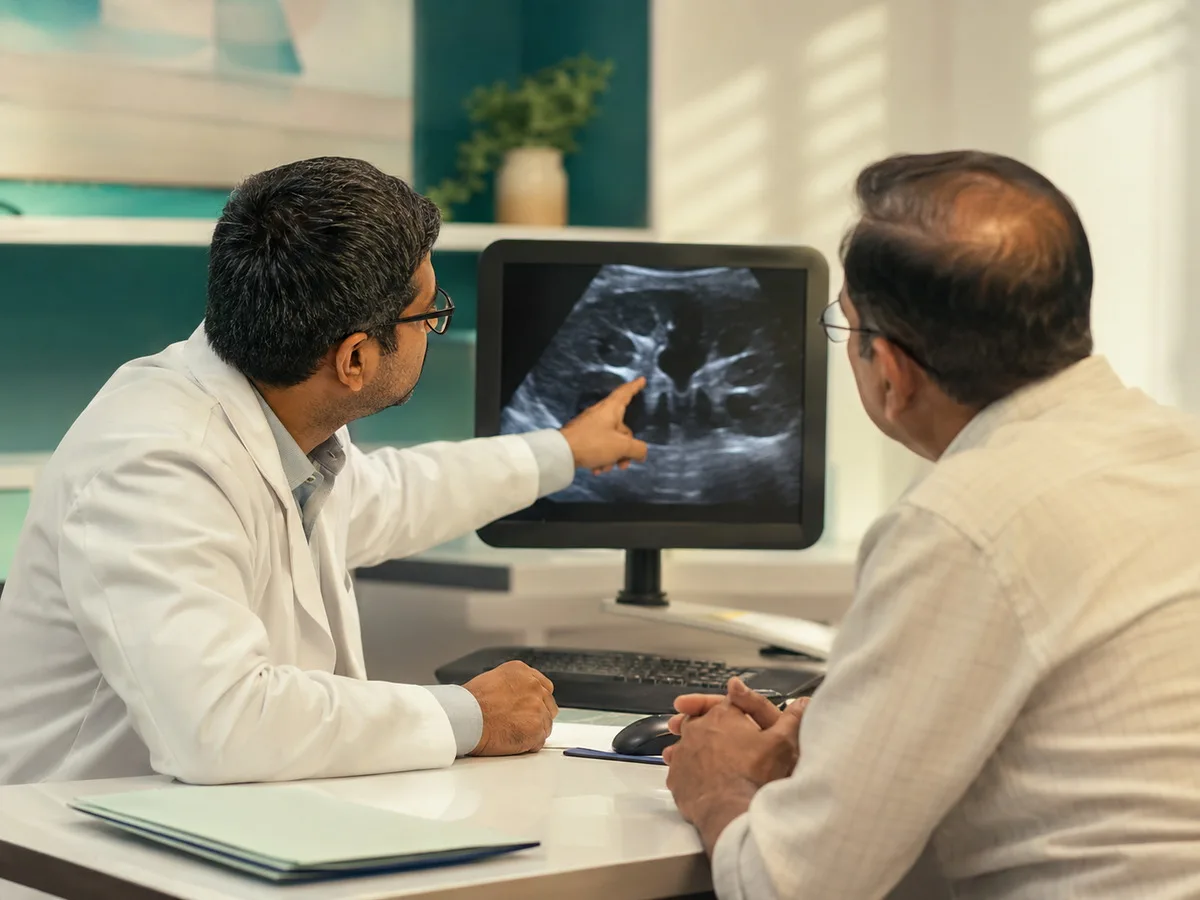
The work-up is systematic and mostly same-day. A urine test confirms real blood and looks for infection. Urine cytology screens for abnormal cells where needed. An ultrasound looks at the kidneys, bladder and prostate. Blood tests check kidney function. Where the source stays hidden, a CT scan maps the urinary tract in fine detail. Then there is cystoscopy - a slim camera that looks inside the bladder directly, done as a short procedure. That gives the definitive look. At Memorial Hospital, urine testing, ultrasound, lab work and CT are in-house. Cystoscopy is done by the urology team.
Hematuria treatment: fixing the cause
There is no single hematuria treatment. There is treatment of what caused it, which is the whole point of the check-up. Infections get targeted antibiotics. Stones get fluids and medicines, or minimally invasive removal. Prostate bleeding responds to BPH treatment, from tablets to TURP. Kidney-filter disease is managed with medicines. Bleeding linked to a medicine gets a joint review with your physician. Tumours, when found, go to staged specialist treatment, where early discovery does most of the heavy lifting. The common thread: every one of these does better the earlier it is found.
What to note before your appointment
A few observations sharpen the diagnosis a great deal, so note them while they are fresh. When did the blood appear, and did it hurt? Did the colour come at the start of the stream, the end, or throughout? Each points to a different spot in the urinary tract. Were there any clots, and what shape were they? Any recent exercise, injury or new medicines? Any fever, weight loss or urinary symptoms in the past few weeks? Bring your list of regular medicines, especially blood thinners. Bring any old urine or ultrasound reports too. Old reports often save new tests.
Urology care at Memorial Hospital, Sonipat
Have you noticed blood in your urine, even once, even without pain? Memorial Hospital's urology OPD runs Monday to Saturday, 10:30 AM to 1:30 PM. It is led by Dr. Gaurav Singh Randhawa, MBBS, MS, M.Ch (Urology), a senior consultant urologist experienced across more than 10,000 endo-urology procedures. For anyone searching for a urologist in Sonipat, the full work-up is under one roof: urine testing, ultrasound, CT and cystoscopy. Heavy bleeding, clots or being unable to pass urine are handled by the 24×7 emergency department.
Frequently asked questions
I saw blood in my urine once and it stopped. Do I still need a check-up?
Yes, especially if you are over forty and the bleeding was painless. A single painless episode is the classic early sign of bladder and kidney tumours. These are highly treatable when caught at this stage. One OPD visit with urine testing and ultrasound answers the question properly.
Can dehydration cause blood in urine?
Dehydration alone rarely causes true bleeding. But it makes urine dark, and dark urine is easily mistaken for blood. It also promotes stones and infections, which do bleed. A urine test tells colour from blood in minutes, so do it rather than assume.
Is blood in urine always serious?
Not always. Infections, stones and exercise are common, treatable causes. But it is always worth checking, because the dangerous causes look the same as the innocent ones. The check-up is simple. Skipping it is the only truly risky option.
Which doctor treats blood in urine in Sonipat?
A urologist. At Memorial Hospital, Dr. Gaurav Singh Randhawa (MBBS, MS, M.Ch Urology) sees hematuria in the urology OPD, Monday to Saturday 10:30 AM to 1:30 PM. Urine testing, ultrasound, CT and cystoscopy are all available in-house.
Answer the question properly
Blood in the urine is your body filing a report. Read it. Book a urology OPD appointment - Monday to Saturday, 10:30 AM to 1:30 PM - and get a definitive answer in one visit. This article is general information and not a substitute for a consultation.
Medically reviewed by Dr. Gaurav Singh Randhawa, MBBS, MS, M.Ch (Urology), Memorial Hospital, Sonipat.
Related specialty: Urology
Editorial note: This article is for general information and is not a substitute for personal medical advice. Please consult a qualified doctor about your specific symptoms. Last updated on 15 August 2026.