



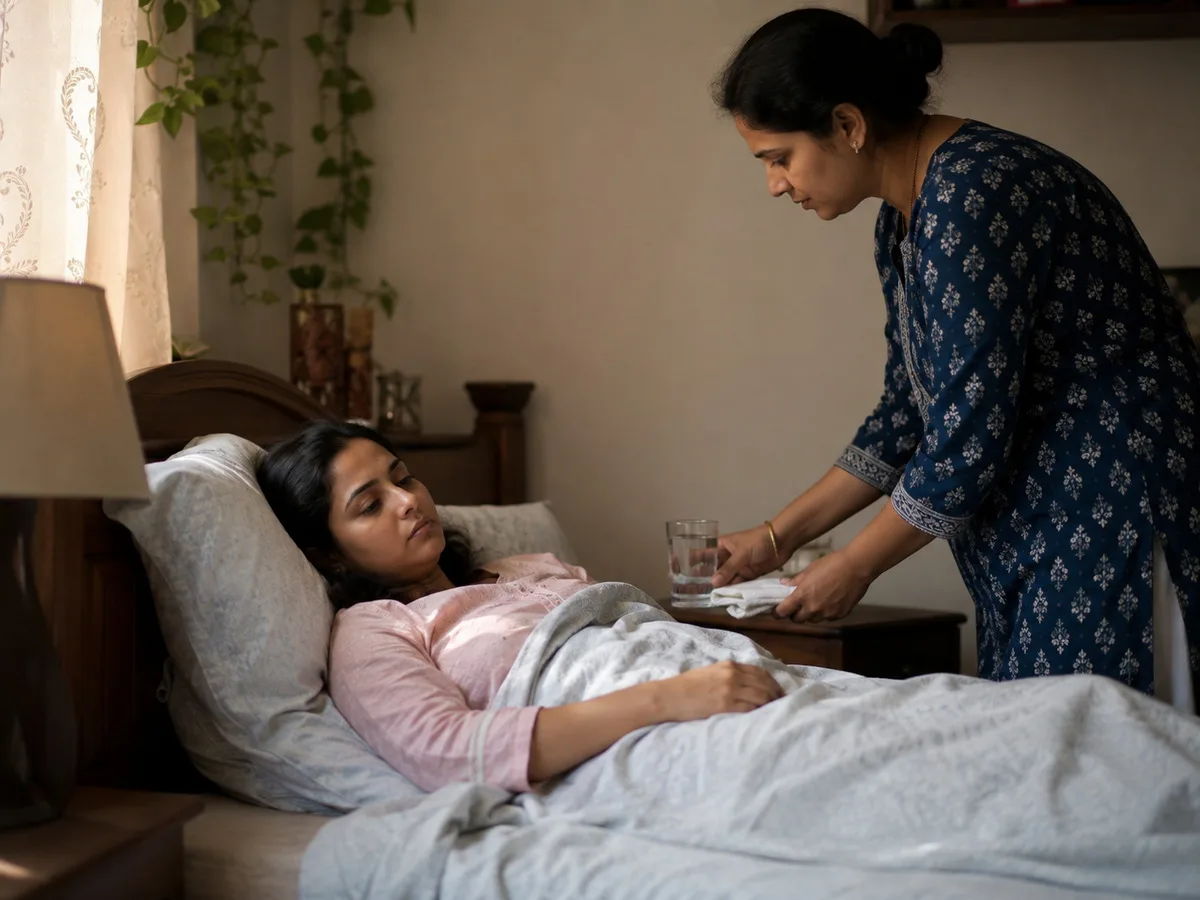
Almost every household in Sonipat gets one each year. The fever climbs in the evening. The body aches. Someone in the family says the words we all know: it is just viral. Most of the time, they are right. A viral fever runs its course and leaves on its own. But "just viral" is also the sentence that delays the fevers that are not viral at all. This guide from our general medicine team in Sonipat explains what to expect, what actually helps at home, and the signs that should send you to a doctor.
What a viral fever actually is
A viral fever is not one illness. It is a whole family of them. Hundreds of common viruses cause it - the ones behind colds, flu, sore throats and stomach upsets. Your body raises its temperature on purpose. Heat is a defence. Most viruses breed less well when the body runs warm.
That matters for one reason. There is no medicine that kills these viruses. Antibiotics do nothing against them, because antibiotics only work on bacteria. Treatment is about comfort and safety while your own immune system does the work. It usually wins.
Viral fever spreads easily. It travels in coughs, sneezes and shared hands or utensils. Someone is usually contagious for a day or two before the fever shows and for several days after.
Viral fever duration: what the days look like
This is the question families ask most. Here is the honest answer.
Days 1 to 3 are the worst. The fever is highest, often 101 to 103°F. It typically rises in the evening and dips by morning. Body ache, headache, tiredness and a sore throat arrive together.
Days 3 to 5 are the turn. The fever starts settling. It comes less often and less high. Appetite creeps back.
Days 5 to 7 are recovery. The fever usually goes. A cough and plain tiredness often stay behind.
So the usual viral fever duration is three to five days of fever, with a week to feel fully normal. Weakness and a dry cough can linger for two weeks. That is annoying, not dangerous.
But there are limits. A fever that is still there on day five deserves a doctor and a blood test. A fever that crosses seven days is not a simple viral fever until proven otherwise. In Haryana, a week-long fever means we test for typhoid and other causes rather than wait.
What actually helps at home
Rest and fluids do most of the work. Drink far more than usual - water, ORS, coconut water, thin buttermilk, dal water, soups. Fever burns through body water quickly, and much of the weakness people feel is simply dehydration.
Paracetamol is the fever medicine of choice, taken at the dose and spacing your doctor advises. It brings the temperature down and eases the aching. Do not add a second painkiller on your own. Never self-prescribe aspirin or ibuprofen-family painkillers during the fever season here, because if the fever turns out to be dengue they raise bleeding risk.
A lukewarm sponge helps a high fever come down. Use normal room-temperature water, not ice water and not cold baths - both make the body shiver, and shivering pushes the temperature back up.
Eat lightly but eat. Khichdi, dal-rice, curd, fruit, soup. There is no need to starve a fever.
The Indian home remedies most families reach for are fine as comfort. Tulsi, ginger, haldi milk, steam. They soothe and they hydrate. They do not shorten the illness, and they are not a reason to delay a doctor when the warning signs below appear.
Two things to skip: antibiotics left over from last time, and a demand for a drip to "recover faster". Antibiotics do nothing for a virus and can cause harm. Most people who need fluids can drink them.
Fever in adults: when to worry
Most viral fever needs no more than the above. This short list is what changes the plan. See a doctor the same day for any of these.
Fever that lasts beyond five days, or comes back after settling. Fever above 103°F that will not come down with paracetamol. Breathlessness, chest pain or a racing heart. Vomiting that will not stop, or clear signs of dehydration - very little urine, a dry mouth, dizziness on standing.
Also come in for confusion, drowsiness or a first-ever fit. A stiff neck with a bad headache. Any rash, bleeding gums, black stools or a nosebleed. Severe stomach pain. Yellow eyes.
Some people should come early rather than wait, because they get ill faster: pregnant women, infants and the elderly, people with diabetes, kidney, liver or heart disease, and anyone on medicines that lower immunity.
When "just viral" is not viral
Between July and October, this is the point of the whole article. Our monsoon fevers all look identical in the first two or three days. Dengue, malaria, chikungunya, typhoid and plain viral fever begin the same way - high fever with body ache. Not even a doctor can tell them apart by looking.
The differences show later. Dengue's danger arrives around day three to five, and often as the fever falls, which is why the dengue warning signs matter so much. Malaria runs in chills-fever-sweat cycles. Chikungunya lands hardest in the joints. Typhoid climbs step by step across a week. We set the whole comparison out in our guide to dengue, malaria and chikungunya.
The practical rule our physicians give every family is simple. Any fever that crosses day two or three in the monsoon deserves a blood test, not a theory. A fever panel gives same-day answers. Guessing loses days, and in dengue and malaria those are the days that matter.
Fever care at Memorial Hospital, Sonipat
Fever is the commonest reason people walk into our OPD, and the pathway is under one roof. Assessment is with Dr. Sameer Mehta, MBBS, MD - OPD daily, 11 AM to 2 PM, plus 6 to 7 PM Monday to Saturday. The in-house laboratory runs the full fever panel with same-day results: blood counts, dengue, malaria and typhoid testing. IV fluids and admission are ready for anyone who needs watching, with ICU backup behind the rare severe case. The 24×7 emergency takes the fevers that arrive at midnight with warning signs. Five decades of monsoons have come through this OPD, so the season's patterns are familiar work here.
Frequently asked questions
How many days does viral fever last?
Fever usually lasts three to five days, and most people feel normal within a week. A cough and tiredness can hang on for up to two weeks, which is normal. Fever still present on day five needs a doctor, and fever beyond seven days needs testing - it is unlikely to be simple viral fever.
What is the best medicine for viral fever in adults?
Paracetamol, at the dose your doctor advises, plus plenty of fluids and rest. There is no medicine that kills the virus itself. Antibiotics do not work on viruses. Avoid adding aspirin or ibuprofen-family painkillers on your own during the monsoon, because they raise bleeding risk if the illness turns out to be dengue.
How do I know if it is viral fever or dengue?
In the first two or three days you cannot tell, and neither can a doctor without a test. Clues appear later: pain behind the eyes and falling platelets point to dengue, chills-and-sweat cycles to malaria, joint pain to chikungunya. A same-day fever panel settles it. Test any monsoon fever that crosses day two or three.
Is viral fever contagious?
Yes. It spreads through coughs, sneezes, and shared hands, towels and utensils - usually from a day or two before the fever appears until several days after. Stay home, cover coughs, wash hands often, and keep separate towels and utensils while the fever lasts.
Test the fever, don't guess it
Most viral fever ends quietly in under a week with rest, fluids and paracetamol. The small number that do not are exactly why the day-five rule exists. If a fever has crossed two or three days in this season, book an OPD visit - daily 11 AM to 2 PM, plus 6 to 7 PM Monday to Saturday - and let a blood test do the deciding. This article is general information and not a substitute for a consultation. If a report comes back with a low platelet reading, our guide to the platelet count normal range explains what that number really means.
Medically reviewed by Dr. Sameer Mehta, MBBS, MD (General Medicine & Critical Care), Memorial Hospital, Sonipat.
Related specialty: General Medicine
Editorial note: This article is for general information and is not a substitute for personal medical advice. Please consult a qualified doctor about your specific symptoms. Last updated on 26 September 2026.