



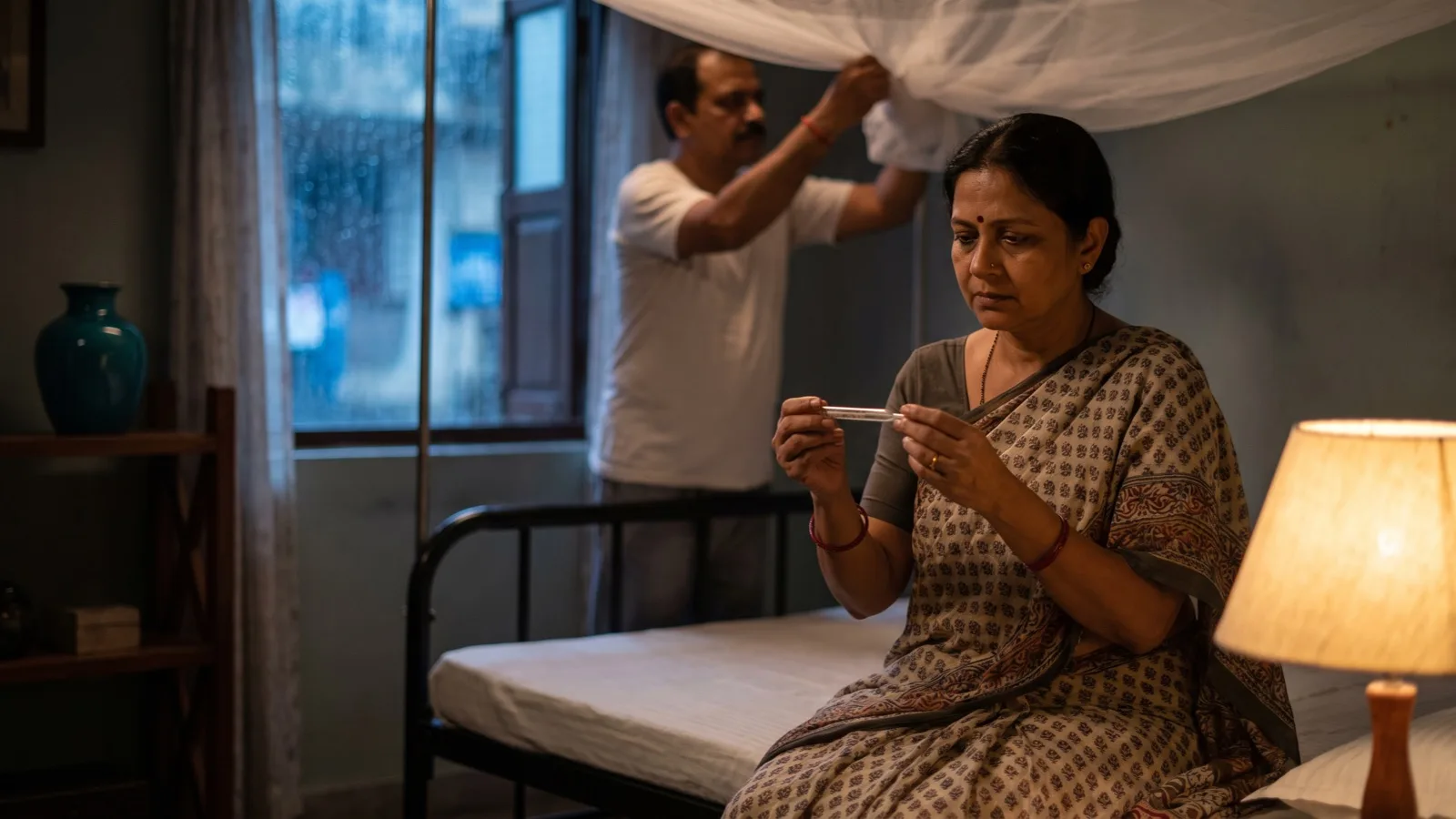
Every August, the same story repeats across Haryana's clinics. A family walks in sure that it is dengue, because the neighbour had dengue. Then the test says malaria. Or chikungunya. Or none of the three.
The mix-up is fair. In the dengue vs malaria vs chikungunya line-up, all three fevers ride the monsoon, and all three start in almost the same way. In the first three days, even doctors will not guess without a blood test. This guide from our general medicine team in Sonipat explains how each fever behaves and where they part ways. It also explains why the test, not the neighbour, should decide the treatment.
Three fevers, two mosquitoes
The trio does not travel on one insect. Dengue and chikungunya ride the Aedes mosquito, a small day-biter striped in black and white. It breeds in clean, stored water: coolers, flowerpot saucers, buckets, old tyres. Malaria rides a different insect, the Anopheles. That one bites at night and breeds in puddles and ditches.
This detail matters at home. Guarding against dengue is mostly about daytime bites and stored water, while guarding against malaria is mostly about nights and nets. A house that takes the season seriously does both. Our guide to monsoon mosquito prevention walks through the same ground.
How each fever behaves
Dengue arrives loudly. The fever is sudden and high, often 103-104°F, with a bad headache and pain behind the eyes. The body ache is deep, and the old name, breakbone fever, is honest. The face may look flushed and a rash may show up. The weakness is far worse than the fever alone would explain.
Dengue's real risk comes later. Around day three to day five, the fever settles, and that is the point where platelet counts can fall. Fluid can also leak out of blood vessels. So the recovery phase, not the fever phase, is dengue's most dangerous stretch. That surprises most families.
Malaria runs in cycles. When the classic pattern shows up, it is hard to miss. First come shaking chills that no blanket fixes, then hours of high fever, then heavy sweats and a wrung-out tiredness. The cycle repeats every one to two days, and between attacks the patient may look almost well. Left alone, some forms of malaria turn severe and can affect the brain, the kidneys or the blood. Malaria is also the one fever of the three with a cure, so treatment should start early.
Chikungunya speaks through the joints. There is fever, plus sudden joint pain that is often harsh. Wrists, fingers, ankles and knees take the worst of it, and the joints often swell. A rash may appear too. The fever passes in a few days, but the joints may not. Chikungunya symptoms in the joints can drag on for weeks or months. It feels like arthritis long after the germ has gone, and many such patients reach bone and joint clinics much later. Our monsoon joint pain guide meets that pattern every season.
Dengue vs malaria: why guessing fails
Here is the honest catch. The textbook pictures above describe illness that has settled in. In the first three days, dengue vs malaria vs chikungunya is a coin toss, and even skilled doctors cannot call it. All three look like high fever with body ache. Typhoid, flu and plain viral fevers crowd into the same frame.
Treating the guess is where harm starts. The wrong family of painkiller gets taken for a dengue that is not dengue, or anti-malaria medicine gets wasted on a viral fever. Worst of all, a real malaria or a real dengue gets waved off as "just viral" until day five.
The way out is quick and plain. A fever panel settles the question, with same-day results. It covers a complete blood count, a malaria smear and rapid test, and dengue NS1 and antibody tests. Chikungunya and typhoid tests are added when the picture asks for them. Our doctors give every family one rule: any monsoon fever that crosses day two or three needs a test, not a theory.
How the treatments differ
Malaria gets cured. Anti-malarial medicines are picked by the type of parasite, and taken in full, they end the infection. Stopping mid-course because the fever went is a common mistake that invites a heavier relapse. For malaria treatment in Sonipat, or anywhere else, the full course is the treatment.
Dengue gets supported. There is no drug that kills the dengue virus, so care means fluids, rest and paracetamol alone for the fever. Never take painkillers of the aspirin and ibuprofen family on your own. They raise bleeding risk when platelets are falling. The day three to five window needs close watching. Most dengue never needs a platelet transfusion, and falling counts need review, not panic.
A few signs change everything. Watch for vomiting that will not stop, belly pain, bleeding gums, black stools or extreme drowsiness. Our dengue warning signs guide sets them out in full. If you see any of them, it means hospital now.
Chikungunya gets outlasted. Rest, fluids and paracetamol come first. Once dengue has been ruled out, a doctor can add anti-inflammatory treatment for the joint phase. That order matters, because the two infections often share a season and a street.
Fever care at Memorial Hospital, Sonipat
Memorial Hospital runs the whole fever pathway under one roof. It begins with an OPD check by Dr. Sameer Mehta, MBBS, MD - OPD daily, 11 AM to 2 PM, plus 6 to 7 PM Monday to Saturday. Our in-house lab runs the full fever panel and reports the same day. IV fluids and admission are ready for the patients who need watching, with ICU backup behind the rare severe case. A 24×7 emergency takes the fevers that arrive at midnight with warning signs. Five decades of monsoons have passed through this OPD, so the season's patterns are familiar work here.
Frequently asked questions
How can I tell if my fever is dengue, malaria or chikungunya?
In the first two or three days, you mostly cannot. All three start as high fever with body ache. Later clues help: pain behind the eyes and falling platelets point to dengue, chills-fever-sweat cycles point to malaria, and harsh joint pain in wrists and ankles points to chikungunya. A same-day blood test settles it, so test any fever that crosses day two or three.
Which is more dangerous - dengue or malaria?
Both can turn serious, in different ways. Dengue's danger is the platelet fall and fluid leak around day three to five. Malaria's danger is untreated spread to the brain or kidneys. Neither should be handled on guesswork. Tested early and treated well, the large majority of both recover fully.
Can paracetamol be taken in dengue?
Yes. Paracetamol is the safe fever medicine in dengue. What must be avoided is self-medicating with aspirin or ibuprofen-family painkillers, which raise bleeding risk when platelets are low. If the fever is not settling with paracetamol, see a doctor rather than adding stronger medicines on your own. For what a falling count does and does not tell you, see our guide to the platelet count normal range.
How long does chikungunya joint pain last?
The fever passes within a week, but joint pain and stiffness can stay much longer. Wrists, fingers and ankles are the usual sites, and the ache may last weeks or sometimes months. It usually fades slowly, and it responds to doctor-guided anti-inflammatory treatment and gentle movement. Pain that stays harsh or keeps swelling deserves a review rather than patience.
Test the fever, not the theory
Monsoon fevers all start the same, and they end very differently. The blood test is what tells them apart in time. For any fever past its second day, book an OPD visit (daily, 11 AM to 2 PM, plus 6 to 7 PM Monday to Saturday). For warning signs, use the 24×7 emergency at any hour. This article is general information and not a substitute for a consultation.
Medically reviewed by Dr. Sameer Mehta, MBBS, MD (General Medicine & Critical Care), Memorial Hospital, Sonipat.
Related specialty: General Medicine
Editorial note: This article is for general information and is not a substitute for personal medical advice. Please consult a qualified doctor about your specific symptoms. Last updated on 26 September 2026.