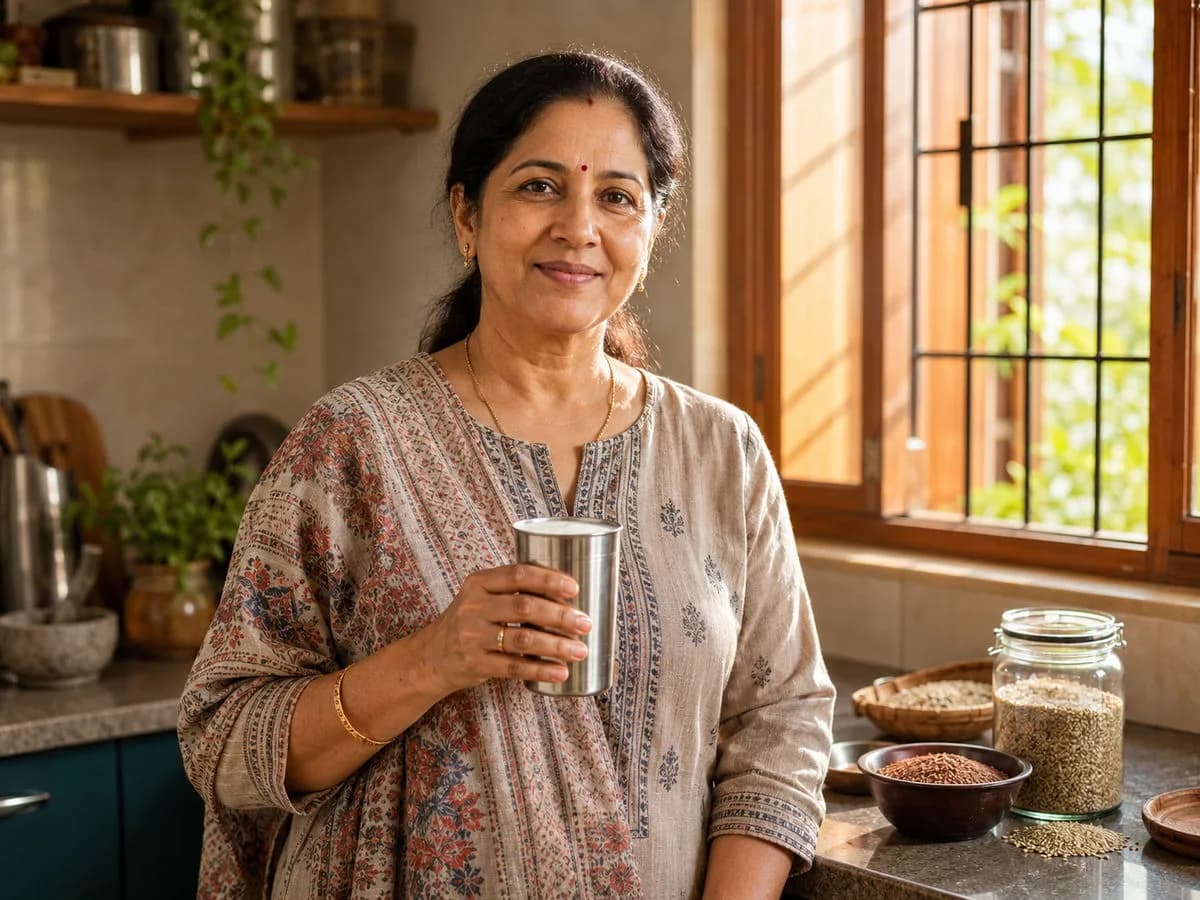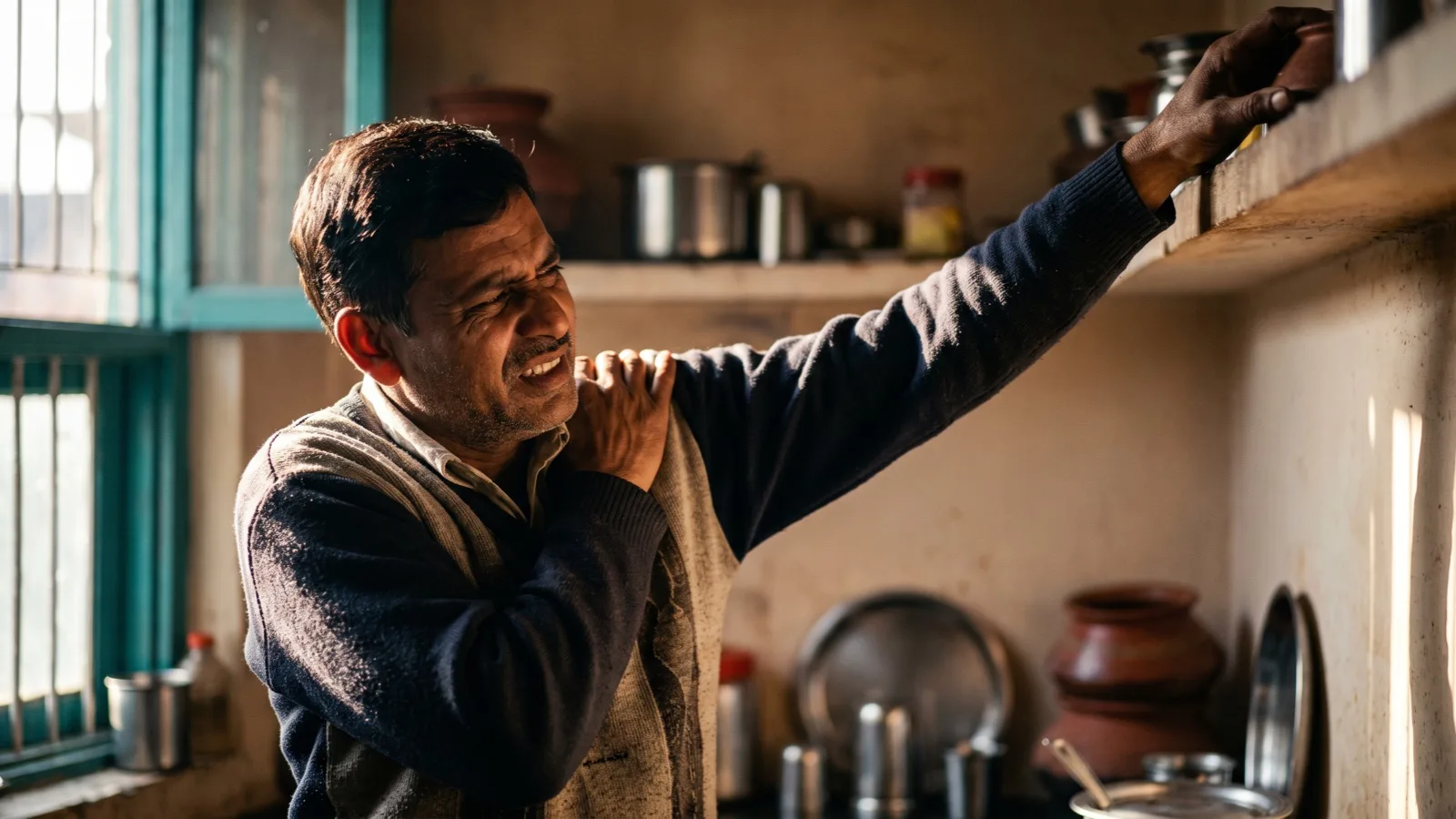



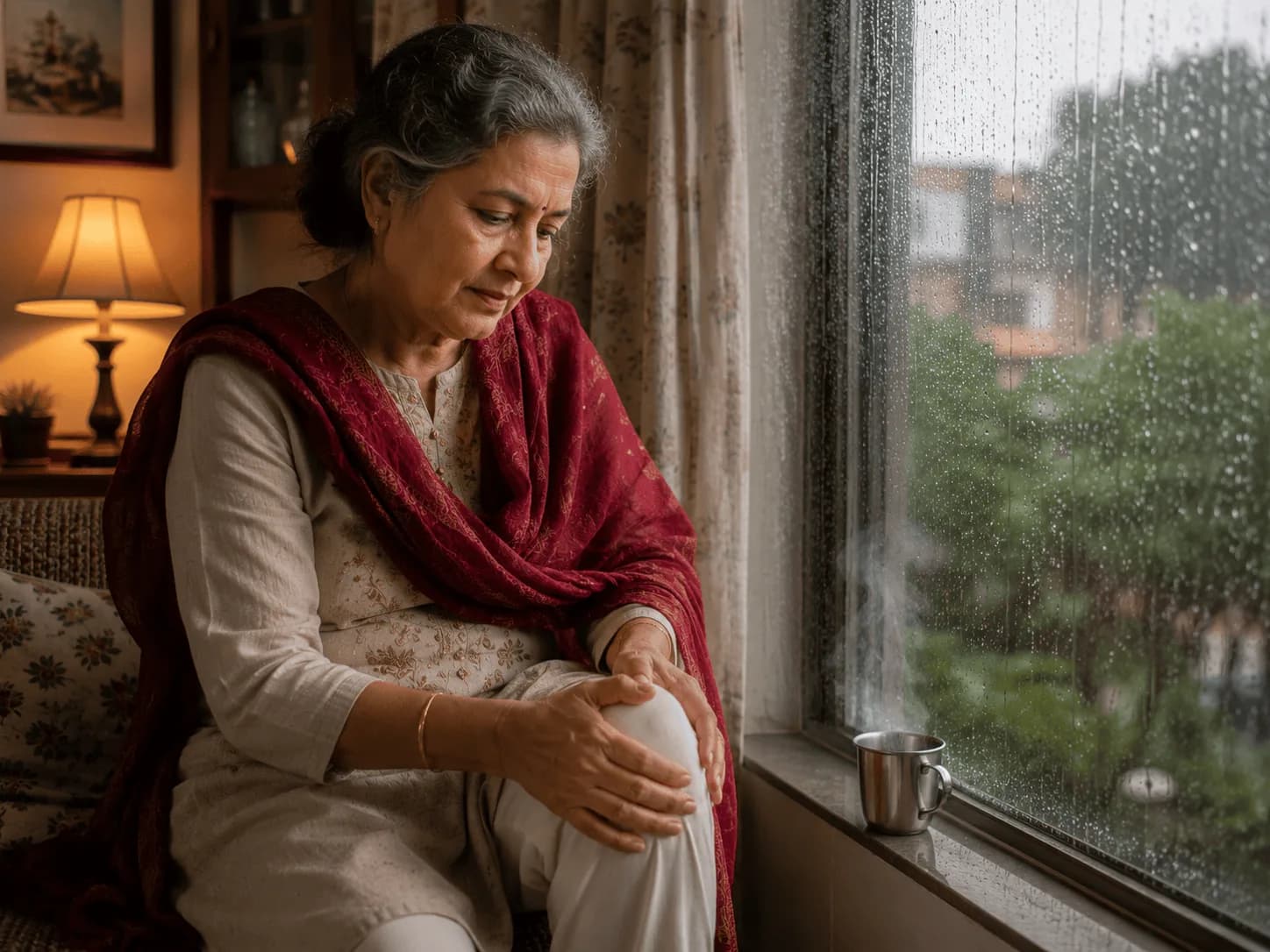
Long before weather apps, Indian grandmothers forecast rain from their knees. Modern medicine has stopped laughing. Joint pain in the rainy season is a real, observed pattern. Arthritis clinics everywhere see more complaints as the monsoon settles in. Here is the good news worth spreading. The season changes symptoms, not the disease. The joint does not get worse in July. It just complains louder. This guide from our bone and joint specialists in Sonipat explains why it happens, what helps, and when to come in.
Joint pain in the rainy season: why it really happens
The leading explanation is air pressure. Each joint sits inside a sealed capsule that senses pressure. Before and during rain, the air pressure falls. Tissues in and around a sore joint then swell a tiny bit and tug on the inflamed lining. That is enough to feel like a deeper ache in an arthritic knee. A healthy knee feels nothing.
Humidity and cool, damp air add their share. Muscles guard and stiffen. Blood flow to the limbs dips. Stiffness reads as pain. The season's habit changes matter just as much. Morning walks get cancelled for weeks. You sit more, and weight creeps up. Joints that move less truly hurt more. Mood plays its part too. Grey, house-bound weeks lower your pain threshold in a measurable way.
Who feels it most? People with osteoarthritis, the wear-related arthritis behind knee pain in your 40s and 50s. People with rheumatoid or other inflammatory arthritis. Old fracture and ligament-injury sites. Joints that have been operated on before. All of these report the weather more loudly than healthy joints do.
What actually helps: the monsoon joint toolkit
Keep moving, and indoors counts. The single best medicine for stiffness is motion. When the lane floods, walk the corridor or the terrace. March gently in place. Use a stationary cycle if you have one. Break up sitting every half hour. Ten minutes of gentle range-of-motion work each morning unlocks the day. Try ankle pumps, knee bends within comfort, and shoulder circles.
Use warmth on purpose. Damp-season stiffness responds beautifully to heat. Place a warm water bag on the knee for 15 minutes before activity. Take warm (not scalding) baths. Keep painful joints covered on cool, damp evenings. Ice is still the choice for a joint that is suddenly swollen and hot. Heat is for the stiff, grumbling one.
Guard the basics. Keep your weight steady despite pakora season. Every extra kilogram multiplies across the knees. Sleep well and drink enough water. Get some daylight whenever the clouds break. Weeks stuck indoors drain the vitamin D stores that joints and bones prefer full.
Respect footwear and floors. Wet floors and worn slippers turn monsoon stiffness into fracture season. Wear non-slip footwear indoors and out. Keep doormats dry and put railings on stairs. Fall-proofing is joint care.
Use medicines sensibly. Short courses of doctor-advised anti-inflammatories manage flare-ups. Pain gels and physiotherapy help many people through the worst weeks. Two things deserve doubt. Season-long self-medication with painkillers is one. Miracle monsoon "oils" that promise cartilage regrowth is the other.
Arthritis in monsoon: flare or progression?
Here is the reassuring frame for arthritis in monsoon months. A weather flare is a volume knob, not a speedometer. Pain that rises in the rains and settles as the season dries has not damaged the joint further. What deserves attention is the flare that breaks pattern. A joint that is hot, red and swollen may mean infection or gout, and needs a same-week review. So does pain with fever. Watch for a joint that locks or gives way. Watch for night pain that wakes you often. Watch for a monsoon flare that fails to settle after the usual measures. And when every monsoon is worse than the last, and daily-life limits spread through the year, it is time to discuss the longer game. That runs from structured physiotherapy to, in advanced cases, knee replacement.
A simple monsoon routine for arthritic joints
Give the season a small daily routine and stick to it. Start with a warm compress on the troublesome joint for ten minutes on waking. Do the ten-minute mobility set before breakfast. Mark out an indoor walking route for rainy days. Corridor lengths count, so track them like steps. Schedule the day's hardest tasks for midday, when joints are loosest. End with an evening review. Any joint that is more swollen tonight than this morning gets rest, elevation and a note in the diary. A fortnight of entries tells you and your doctor exactly which weather, activities and remedies your joints respond to. That personal data beats general advice every time.
When to see a specialist this season
Come in rather than wait out the season in these cases. This is your first-ever real joint pain, which deserves a diagnosis whatever the weather. A known arthritic joint changes character, with more swelling, new instability or night pain. Fever joins joint pain. Or function is shrinking, so stairs are avoided, walks are abandoned and sleep is disturbed. Knee pain treatment in Sonipat at the right time usually means exercises, a weight plan and short courses of medicine. The operating theatre is kept for the minority whose joints have truly exhausted non-surgical care.
Joint care at Memorial Hospital, Sonipat
Monsoon flare-ups and year-round joint problems at Memorial Hospital are seen by Dr. Gaurav Singhla, MBBS, MS (Orthopaedics), FHKR. He is an orthopaedic surgeon with fellowship training in joint replacement and arthroscopy from Toronto, Canada. Examination, X-rays and blood tests for inflammatory arthritis all run in-house. Treatment spans physiotherapy plans, flare management, injections where appropriate, and surgical options for advanced disease. Please call the hospital for current OPD timings and to plan a consultation. For a hot, swollen joint with fever, use the 24×7 emergency without waiting.
Frequently asked questions
Why do my joints hurt more in the rainy season?
Falling air pressure lets tissues around sensitive joints swell slightly. Humidity and damp cold stiffen muscles, and monsoon inactivity stiffens everything further. The effect is real but temporary. The weather turns up the volume on an existing joint problem without making the joint itself worse.
Does monsoon joint pain mean my arthritis is getting worse?
Usually not. A flare that follows the weather and settles afterwards reflects symptoms, not new damage. Worsening looks different: more frequent flares in all seasons, night pain, new swelling or instability, and shrinking daily function. That pattern deserves a proper orthopaedic review.
What gives quick relief for joint pain in the rains?
Warmth helps, such as a hot water bag for 15 minutes. So does gentle movement rather than rest, and covering the joint in damp weather. For real flares, take a short doctor-advised course of anti-inflammatories. Regular indoor exercise through the season prevents more pain than any remedy relieves.
Where can I get knee pain treatment in Sonipat?
At Memorial Hospital: Dr. Gaurav Singhla (MBBS, MS Orthopaedics, FHKR Canada) provides assessment with in-house X-ray and laboratory work. He offers physiotherapy-led treatment plans and the full surgical range for advanced arthritis. Call the hospital for current OPD timings.
Outlast the season comfortably
The rain will pass; the habits remain. Move daily indoors, warm the stiff joints, and guard the floors. If a flare breaks the usual pattern, call Memorial Hospital for Dr. Singhla's current OPD timings or send an appointment request online. This article is general information and not a substitute for a consultation. A single joint that flares suddenly overnight, often the big toe, behaves differently, and our guide to the uric acid normal range explains why.
Medically reviewed by Dr. Gaurav Singhla, MBBS, MS (Orthopaedics), FHKR (Canada), Memorial Hospital, Sonipat.
Related specialty: Orthopaedics & Joint Replacement
Editorial note: This article is for general information and is not a substitute for personal medical advice. Please consult a qualified doctor about your specific symptoms. Last updated on 26 September 2026.