


The first rain arrives in Sonipat like a festival. It also brings its own guest list. Within weeks of the monsoon breaking, OPDs across Haryana fill with fevers, loose motions and body aches. The season's two most serious regulars check in too: dengue and typhoid. Here is the good news. Dengue prevention in monsoon season is mostly built in June and July, at home. The steps need attention more than money. This checklist from our general medicine team in Sonipat is the preparation that works.
Why the rains bring disease
Monsoon diseases in India follow two roads into the house. The first is standing water. The dengue mosquito (Aedes) breeds in small, clean pools of water. A cooler tray, a flowerpot saucer, a tyre in the yard - all will do. It bites during the daytime. The second road is dirty food and water. Rain flushes surface filth into water sources. Humidity keeps germs alive on cut fruit and street food. That drives typhoid, jaundice and stomach infections. Guard both roads and you have covered most of the season. And this season begins just as summer's heat emergencies wind down.
Dengue prevention in monsoon: dry the breeding grounds
The dengue mosquito rarely flies far from where it was born. That is usually inside or just outside your own house. So prevention is wonderfully local.
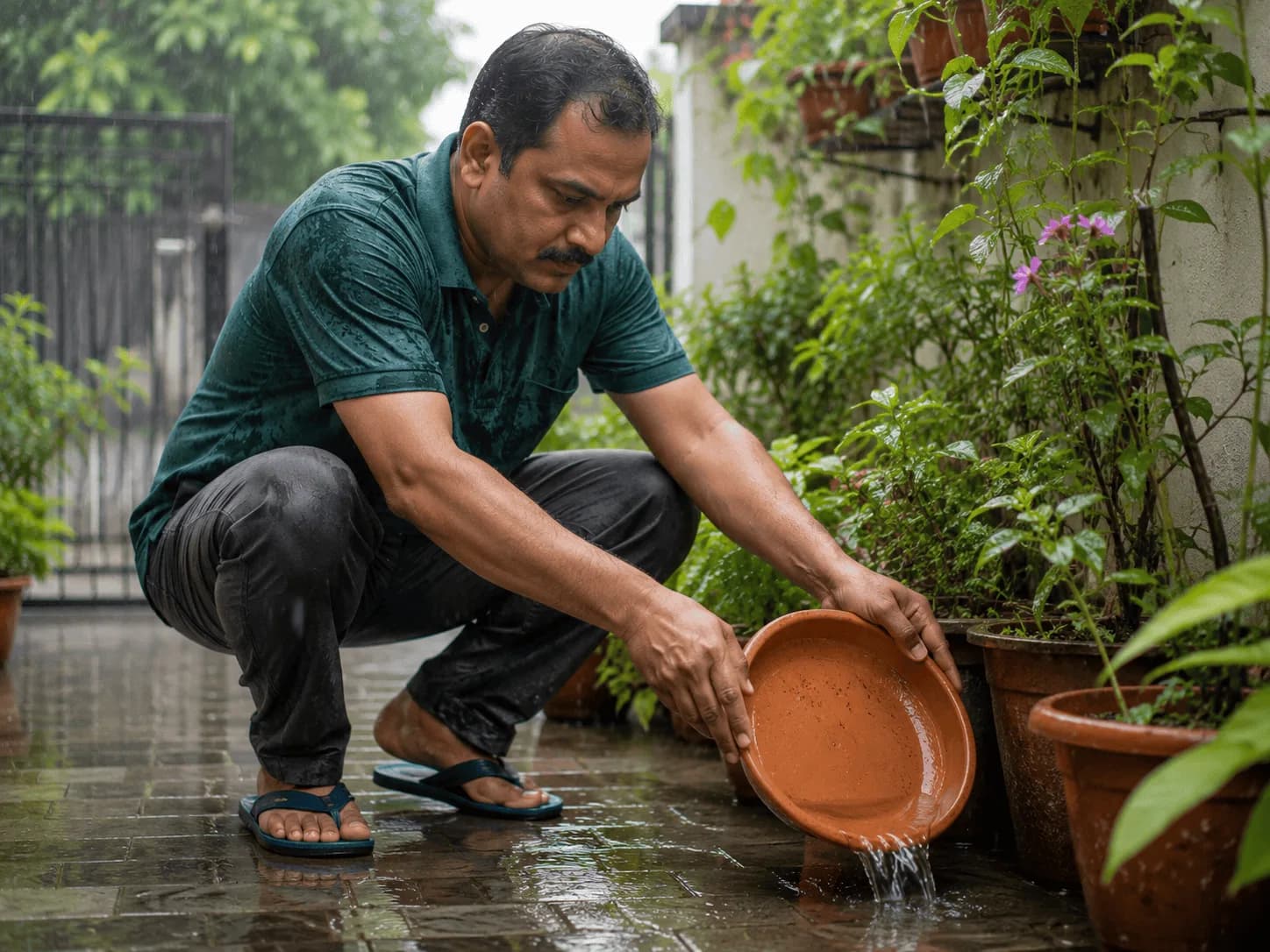
Do a weekly water hunt. Every Sunday, walk the house and empty anything holding water. Check cooler trays and scrub them, because eggs stick. Check flowerpot saucers, buckets on the roof, tarpaulin folds, old tyres and bottle caps in the yard. No standing water for a week means no adult mosquitoes from your property.
Cover what must store water. Tanks, drums and matkas need tight lids or cloth covers. Change stored water every few days where you can.
Defend the daytime hours. Aedes bites by day. So repellent creams and full sleeves matter in the morning and evening - at school, at office and at home, not just at night. Screens on windows help. So do nets over daytime naps, especially for children and the elderly.
Support the neighbourhood effort. One clean house next to a breeding site is only half protection. Construction sites, vacant plots and clogged drains breed for the whole lane. Municipal fogging and drives work best when residents report problems and cooperate.
Typhoid prevention: guard the plate and the glass
Typhoid prevention in the monsoon is a food-and-water discipline. Drink safe water: boiled, filtered or reliably packaged. Be strict about this for children. Eat hot, fresh-cooked food. Let the golgappa and cut-fruit stalls wait out the season, because street food's risk multiplies in the rains. Wash hands with soap before eating and after the toilet. It is the simplest medical step known. Wash vegetables and fruit well. Refrigerate leftovers promptly, and reheat them fully. A typhoid vaccine exists and is worth discussing with your doctor. This matters most for children and food-handlers.
The rest of the season's guest list
Dengue and typhoid headline the season, but the supporting cast deserves a line each. Malaria and chikungunya also ride on mosquitoes. The same water discipline keeps them down. Viral fevers, colds and eye infections (conjunctivitis) spread fast in damp, crowded settings. Handwashing limits them. So does keeping unwell children home from school for a few days. Leptospirosis enters through cuts on the feet in flood water. Wear covered footwear when wading. Wash and disinfect any wound that meets drain water. Fungal skin infections thrive between wet toes and under damp clothes. Drying properly and changing out of wet clothing quickly is the whole prevention. None of these needs fear. All of them reward the same habits this checklist builds.
Stock the monsoon shelf
A small home kit prevents midnight panic. Keep a digital thermometer, ORS packets and paracetamol. Paracetamol is the fever medicine of choice in dengue season. Aspirin and painkillers like ibuprofen can worsen dengue bleeding. Avoid them in undiagnosed fevers. Top up your family's regular medicines. Add repellent, and save the hospital's number in your phone. Add a covered dustbin and a dry-day habit, and the house is ready.
When a monsoon fever needs a doctor
Most monsoon fevers are viral. They settle in three to four days with rest, fluids and paracetamol. See a doctor promptly when a fever lasts beyond three days. See one at once if it comes with severe body or joint pain, or pain behind the eyes (dengue's signature). The same goes for a rash, bleeding gums or black stools. Repeated vomiting or severe stomach pain also need a doctor. And be quick when the fever affects an infant, a pregnant woman, an elderly person, or anyone with diabetes or heart disease. Do not self-prescribe antibiotics. They do nothing for viral fevers, and they blunt the tests that diagnose typhoid.
We cover the specific dengue warning signs that mean hospital, not home care, in a separate guide. Reading it before the season is exactly the kind of preparation this article is about.
Monsoon care at Memorial Hospital, Sonipat
Through the season, Memorial Hospital's physician OPD is led by Dr. Ramesh Mehta, MBBS, MD, the hospital's founder and senior physician. His OPD runs daily from 10:30 AM to 3:00 PM. Fever work-ups run in the in-house laboratory with same-day results. That covers dengue tests, typhoid tests, malaria screening and platelet counts. The 24×7 emergency department stands behind the severe cases: dengue needing monitoring, dehydration needing IV fluids, and any fever with warning signs. Preparing in June beats queueing in August.
Frequently asked questions
How can I protect my family from dengue this monsoon?
Kill the breeding and block the bite. Empty and scrub every water-holding container weekly - coolers, saucers, tyres, roof clutter. Cover stored water, use repellents and full sleeves during daytime hours, and screen windows. The dengue mosquito breeds in clean water at home and bites by day, so home discipline is the real vaccine.
What should I avoid eating in the monsoon?
Skip street food, cut fruit and raw salads from outside, and anything left uncovered. Humidity turns them into germ culture plates. Choose hot, freshly cooked meals, safe drinking water, and well-washed home produce. These few weeks of restraint prevent most typhoid and stomach infections.
Which fever medicine is safe in dengue season?
Paracetamol, in proper doses. Avoid aspirin and ibuprofen-type painkillers for undiagnosed monsoon fevers. They can worsen bleeding if the fever turns out to be dengue. If fever crosses three days, or any warning sign appears, get tested instead of adding medicines.
When should a monsoon fever be shown to a doctor?
After three days of fever. Go at once with severe body pain, pain behind the eyes, rash, any bleeding or repeated vomiting. Infants, pregnant women, the elderly and people with chronic disease should be seen early too. Early testing separates dengue, typhoid and malaria from harmless viral fever, and early treatment is what prevents complications.
Prepare in June, relax in August
An hour of preparation now buys a far calmer season. A water hunt, a covered tank, a stocked shelf - that is all it takes. If a fever does arrive, book an OPD visit (daily, 10:30 AM to 3:00 PM). Come straight to the 24×7 emergency with warning signs. This article is general information and not a substitute for a consultation.
Medically reviewed by Dr. Ramesh Mehta, MBBS, MD (Internal Medicine), Memorial Hospital, Sonipat.
Related specialty: General Medicine
Editorial note: This article is for general information and is not a substitute for personal medical advice. Please consult a qualified doctor about your specific symptoms. Last updated on 15 August 2026.