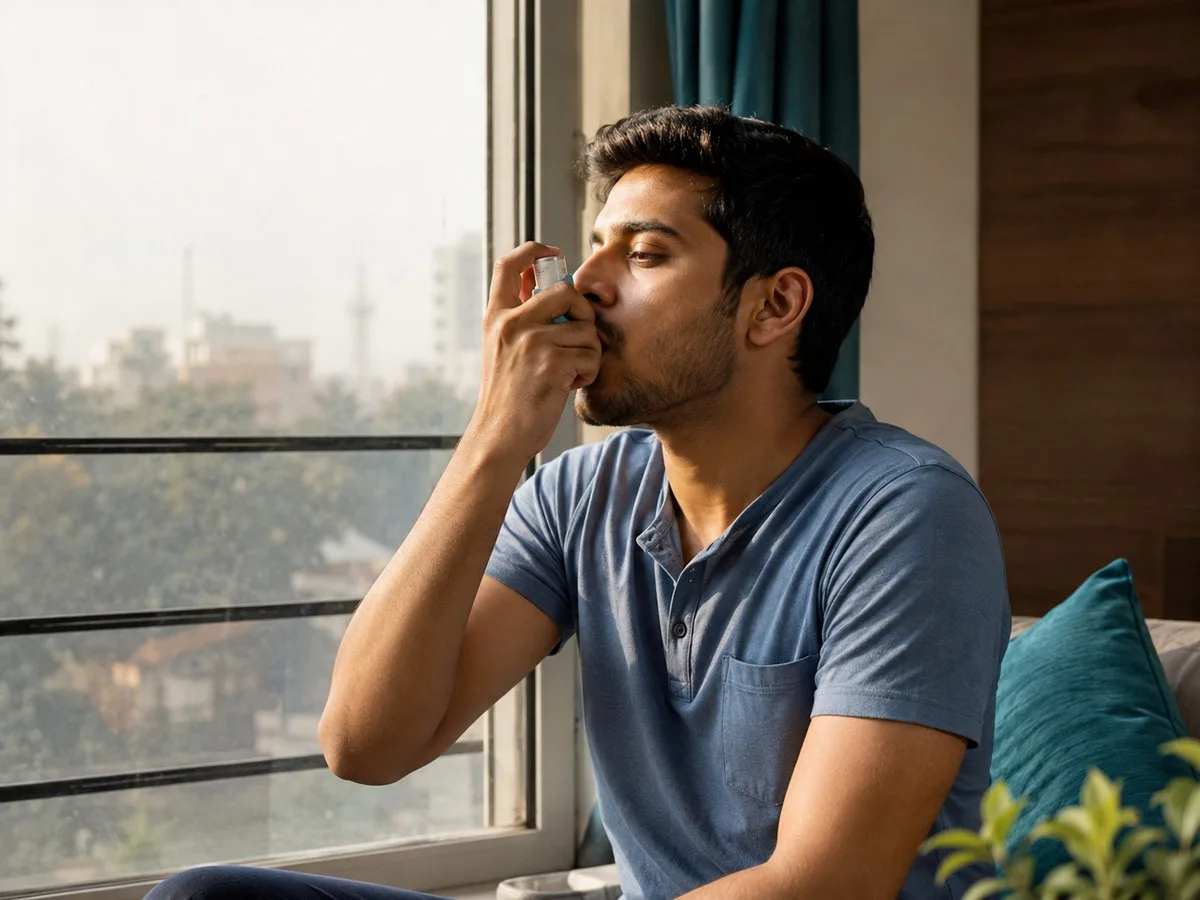



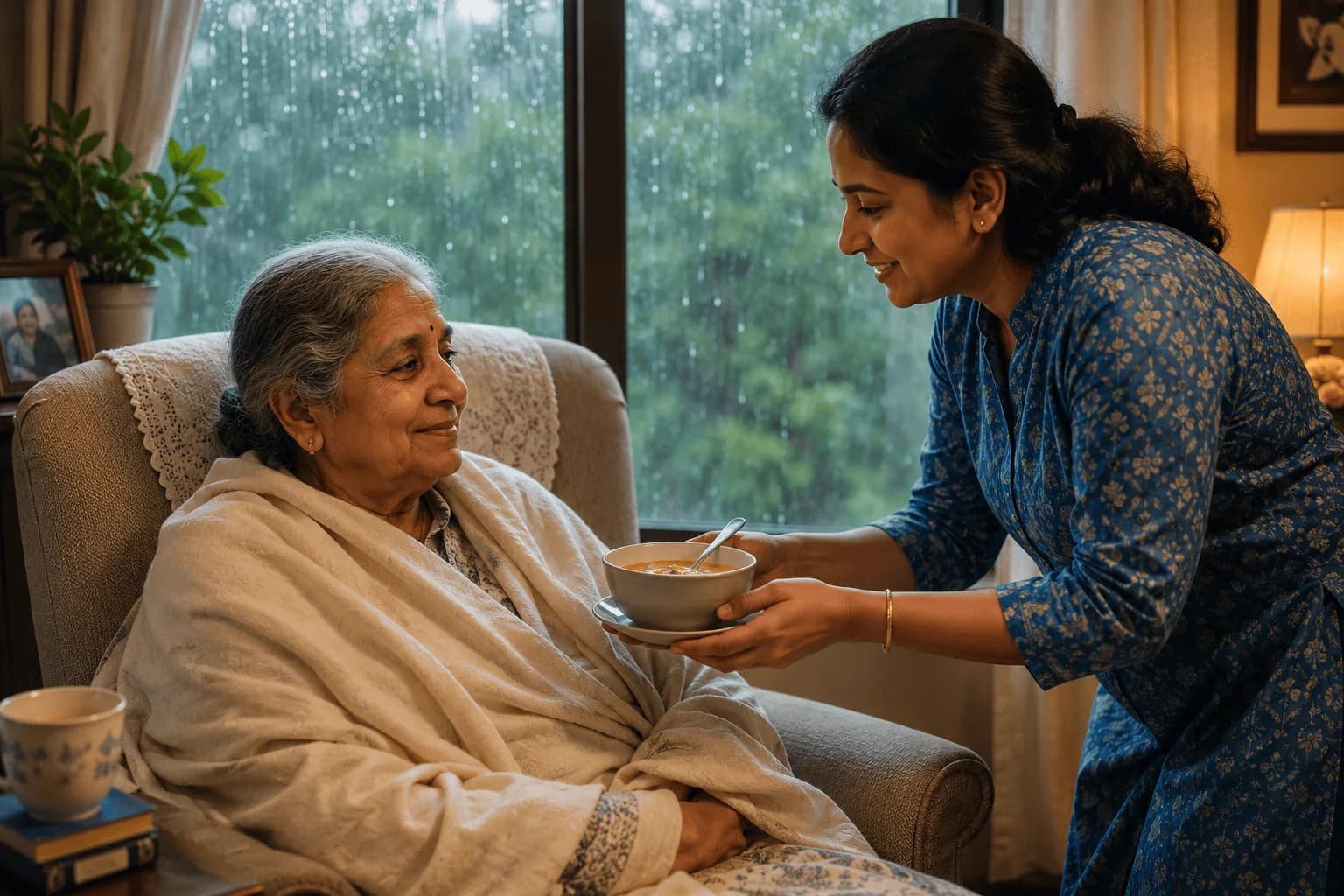
Wet monsoon air is kind to germs. Chest infections then hit hardest at the two ends of life. In between sits a risky myth. Most people think pneumonia always arrives with a high fever and a loud cough. In older people it often does neither. The commonest pneumonia symptoms in elderly patients are the quiet ones: new confusion, extra sleep, a fall, or food left on the plate. This guide comes from our chest and lung care team in Sonipat. It explains how a lung infection really looks at both ends of life. It also tells you when a rainy-season chest infection means hospital.
Why the monsoon multiplies chest infections
Damp air keeps germs alive for longer. Families crowd indoors with the windows shut, and every cough is shared. Wet clothes and soaked commutes chill the airway's defences. The season brings its own fevers too. Viral flu is one. So are the mosquito-borne fevers in our dengue warning signs guide. These fevers leave the body weak. A chest infection can then move in behind them. Doctors watch for this second-week pneumonia after any flu.
Most monsoon coughs and colds stay high up in the airways. They pass in a few days. This one is different. The germs settle in the lung tissue itself. The tiny air sacs fill up with fluid. Breathing is the one job the body cannot pause. Now it starts to take real effort.
Pneumonia symptoms in the elderly: the quiet kind
The textbook version is loud. High fever. Shaking chills. Chest pain and a wet cough. After the age of 65 or 70, that textbook fails often enough to be risky. An older body fights germs more weakly, and much more quietly.
Watch for other things instead. New confusion is the most useful sign of all. An older person who suddenly is not themselves in the head has an infection until proved otherwise. Odd sleepiness or weakness counts too. Sometimes it shows up as a fall. So does a loss of hunger, or a plate pushed away. Watch the breathing as well. It may look faster or more shallow than usual, or a whole sentence may be a struggle to finish. Fever may be low, or not there at all. Body heat may even drop below normal, and that is a warning in itself. The cough may be mild, or missing altogether.
Here is the rule for families. In an older relative, watch three things during fever season: how alert they are, how they eat, and how much energy they have. Any sudden change there needs a same-day check by a doctor. Do not wait for the weekend. Caught on day one, this illness is a very different thing from the same illness caught on day four.
Pneumonia in children: fast breathing is the alarm
In children the illness shows its hand another way. The main sign is fast breathing. A child who breathes clearly quicker than normal at rest needs a doctor the same day. That goes double with fever, cough or trouble feeding.
Some signs mean emergency, right now. The skin between or below the ribs sucks inward with each breath. Doctors call this chest indrawing. A grunting sound with each breath is another. So are blue lips or a blue tongue. A child too breathless to drink or feed. Odd sleepiness, or a body gone limp. Fever in any baby under two months. Children cope bravely and then crash fast. That is why "let us watch till morning" is the one plan pneumonia in children does not forgive.
What helps prevent it is simple. Keep the child's routine shots on time. The schedule includes vaccines that guard against pneumonia. Feed only breast milk in the early months. And keep smoke out of the child's air, whether it comes from a cigarette or a chulha.
Chest infection or something else? Getting the name right
Not every monsoon cough is pneumonia. Bronchitis is far commoner and usually milder. It sits in the airways, not in the lung tissue. Asthma flares in damp, mouldy air and can look just like an infection. And a cough that refuses to settle after three weeks earns a full work-up of its own. That work-up includes TB testing. The monsoon does not suspend the rules of TB.
Telling these apart is what tests are for. The doctor listens to the chest first. An X-ray then settles it, because it shows the affected patch directly. A simple fingertip probe reads the oxygen level. Blood counts fill in the rest. At Memorial Hospital all of this runs in-house, with same-day answers.
When a chest infection needs the hospital
Come in at once, at any hour, if you see any of these. Breathlessness at rest, or while talking. Blue lips, confusion or wild restlessness, which all mean low oxygen. Chest pain when you breathe in. Fever past three days, or fever that returns after things looked better. That return is the classic second-wave signal. A cough that brings up rust-coloured or blood-stained phlegm. Any of the red flags for the old or the young above.
Some people should set the bar even lower. That means anyone with diabetes, heart disease, kidney disease or a long-term lung problem. This illness adds to whatever it lands on.
Treated early, most cases do well. Bacterial ones need the right antibiotic. Some patients need oxygen support. Fluids and fever control help everyone. A small number are ill enough to need a bed, with oxygen, IV antibiotics and close watching. The sooner that call is made, the shorter the stay tends to be.
Chest infection treatment at Memorial Hospital, Sonipat
For chest infection treatment in Sonipat, Memorial Hospital runs the whole path under one roof. A daily physician OPD does the first check. X-ray, oxygen reading and the lab are all in-house. Beds for admission come with oxygen and IV therapy. ICU and ventilator backup stand ready for severe cases. Our 24×7 emergency never asks a breathless patient to wait for morning. Chest specialist opinions come from Dr. KL Bansal, MBBS, MD, DTCD, an experienced chest physician. He sees admitted and referred patients - please call the hospital to check his consultation availability.
Frequently asked questions
What are the signs of pneumonia in elderly people?
Often not the textbook ones. Look for new confusion, odd sleepiness, refused food, weakness or a fall. Faster breathing counts too, with or without fever and cough. In fever season, any sudden change in the mind or the energy of an older person needs a same-day check. That check should include an X-ray and an oxygen reading.
How do I know if my child's chest infection is serious?
Count the breaths. Fast breathing at rest is the key sign in children. Skin sucking in between the ribs, grunting, blue lips, no strength to drink, or odd sleepiness all mean emergency care right away. Fever in a baby under two months always needs a doctor the same day.
Can pneumonia be treated at home?
Mild cases in a healthy adult often can be. That means the antibiotics your doctor prescribes, rest, fluids and a planned review. Home care is wrong for an older person with any red flag, a small child with fast breathing, or anyone breathless at rest. It is also wrong for people with diabetes, heart or lung disease. Those cases belong in hospital, early.
Where can I get chest infection treatment in Sonipat?
Memorial Hospital on State Highway 11. We have a daily physician OPD, in-house X-ray, oxygen checks and labs. Admission with oxygen and IV antibiotics is ready when it is needed, with ICU backup. The 24×7 emergency stays open all night. Chest specialist consultations with Dr. KL Bansal (MBBS, MD, DTCD) are available for admitted and referred patients - call to check availability.
Guard the two ends of the family
This season, watch two dials. Watch how alert the grandparents are, and watch how the grandchildren breathe. Those are the two that pneumonia moves first. For a cough or fever that worries you, book a physician consultation at the daily OPD. For breathlessness or any red flag, come straight to the 24×7 emergency. This article is general guidance. It is not a substitute for a visit to your doctor.
Medically reviewed by Dr. KL Bansal, MBBS, MD, DTCD (Respiratory Medicine), Memorial Hospital, Sonipat.
Related specialty: Respiratory Medicine
Editorial note: This article is for general information and is not a substitute for personal medical advice. Please consult a qualified doctor about your specific symptoms. Last updated on 15 August 2026.