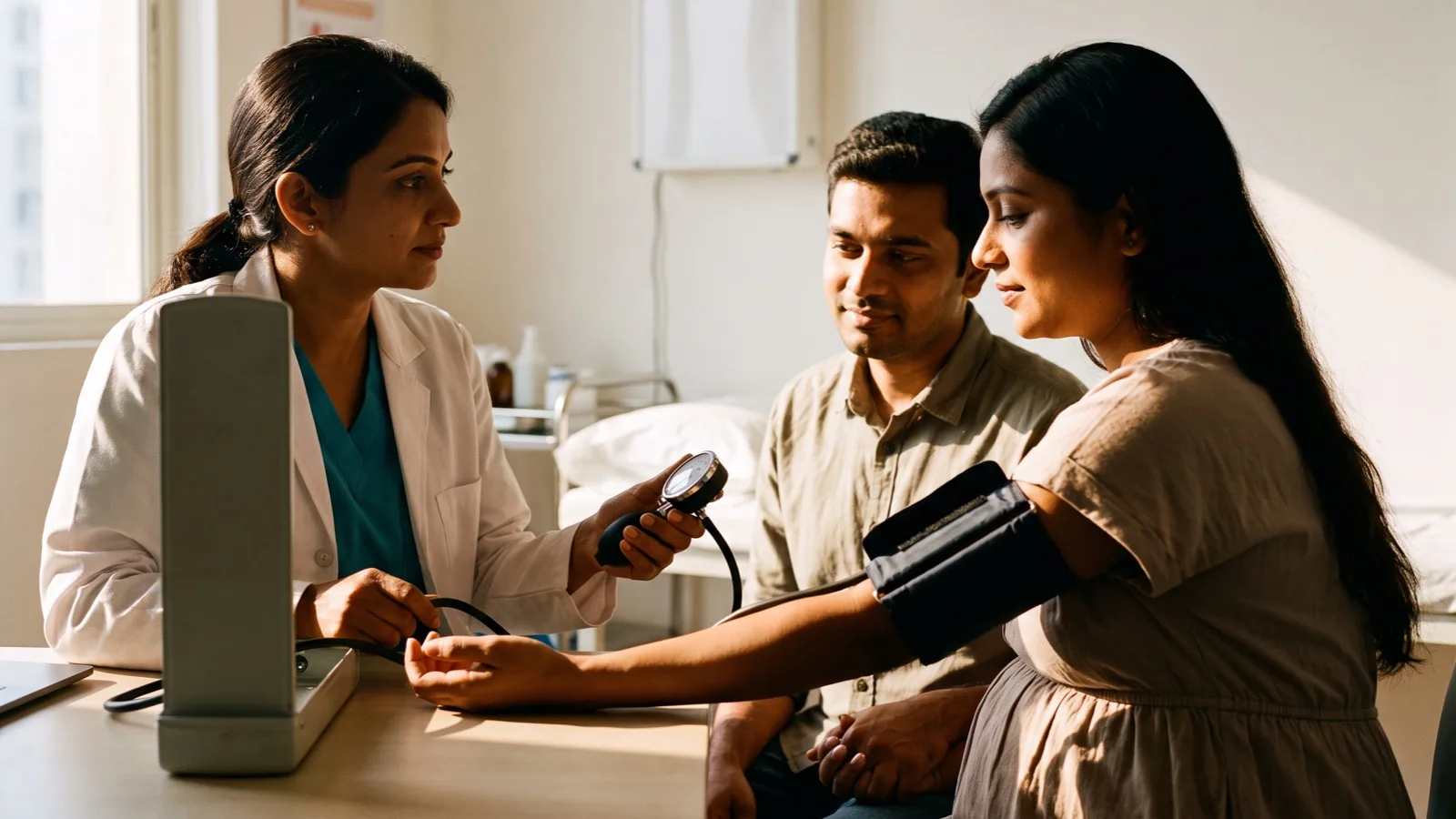
Somewhere in the third trimester, almost every family asks the same thing. Will it be normal or operation? Here is the honest answer to the normal delivery vs c-section question. Medicine decides some of it. Events on the day decide some of it. And your preparation shapes the rest - more than most people think. This guide from our maternity and gynaecology care in Sonipat team explains how the choice is really made. It also shows where you have a real say.
Normal delivery vs C-section: what each route involves
A normal (vaginal) delivery is the body's own process. Labour contractions slowly open the cervix. The baby is then born through the birth canal. Recovery is usually quick. Most mothers are walking within hours. They eat normally the same day and go home within a day or two.
A caesarean section is an operation. The baby is delivered through a cut in the lower belly and womb. This is done under anaesthesia - usually a spinal, so you are awake and meet your baby at once. It takes under an hour. It is one of the safest major operations done today. But it is still surgery. Recovery is longer, and it matters for future pregnancies.
Neither route is a failure or a shortcut. The right choice is the one that gets your baby out safely, from your pregnancy. In India, roughly one delivery in five now happens by caesarean. The share is higher in cities. So whichever route you take, you are in well-travelled company. Both are routine work for an experienced maternity team.
Why doctors prefer normal delivery when it is safe
When conditions allow, vaginal birth has real advantages. Recovery is faster and the hospital stay is shorter. Infection and bleeding risk is lower. Early breastfeeding is easier. The next pregnancy starts on safer ground. The baby gains too. Its lungs are helpfully squeezed during birth, which helps breathing. This is why a good obstetrician's default is normal delivery. It is also why patience during a long labour is often the best medicine there is.
When a C-section is genuinely the right call
Some caesareans are planned in advance because the medical picture is clear. The placenta may lie over the birth passage (placenta praevia). The baby may lie sideways. Some breech positions call for it. So do two or more previous caesareans. Some health conditions in the mother do as well. And sometimes the baby's estimated size is clearly too big for the mother's pelvis.
Other caesareans become necessary during labour. These decisions protect lives. The baby's heartbeat may show distress. Labour may stall despite good contractions. There may be bleeding, cord problems, or rising blood pressure in the mother. An emergency caesarean after hours of labour is not a plan that failed. It is monitoring that worked, catching trouble in time.
This is exactly why the place you deliver matters. You want a 24×7 operation theatre, anaesthesia cover and newborn care on site. We cover this in choosing your maternity hospital.
What you can genuinely influence
You cannot control where the placenta implants. But several things that tilt the odds toward normal delivery are in your hands.
Attend every antenatal visit. Problems caught early are managed early - blood pressure, sugar, growth issues. That keeps more delivery options open. The full schedule is in our trimester-by-trimester antenatal checklist.
Manage weight gain and sugar. Pregnancy diabetes left uncontrolled grows very large babies. Very large babies need more caesareans. Diet and monitoring keep this in check.
Stay active through pregnancy, with your doctor's clearance. Walk daily and do the exercises your doctor approves. Labour is a truly athletic event. It demands stamina, and this is how you build it.
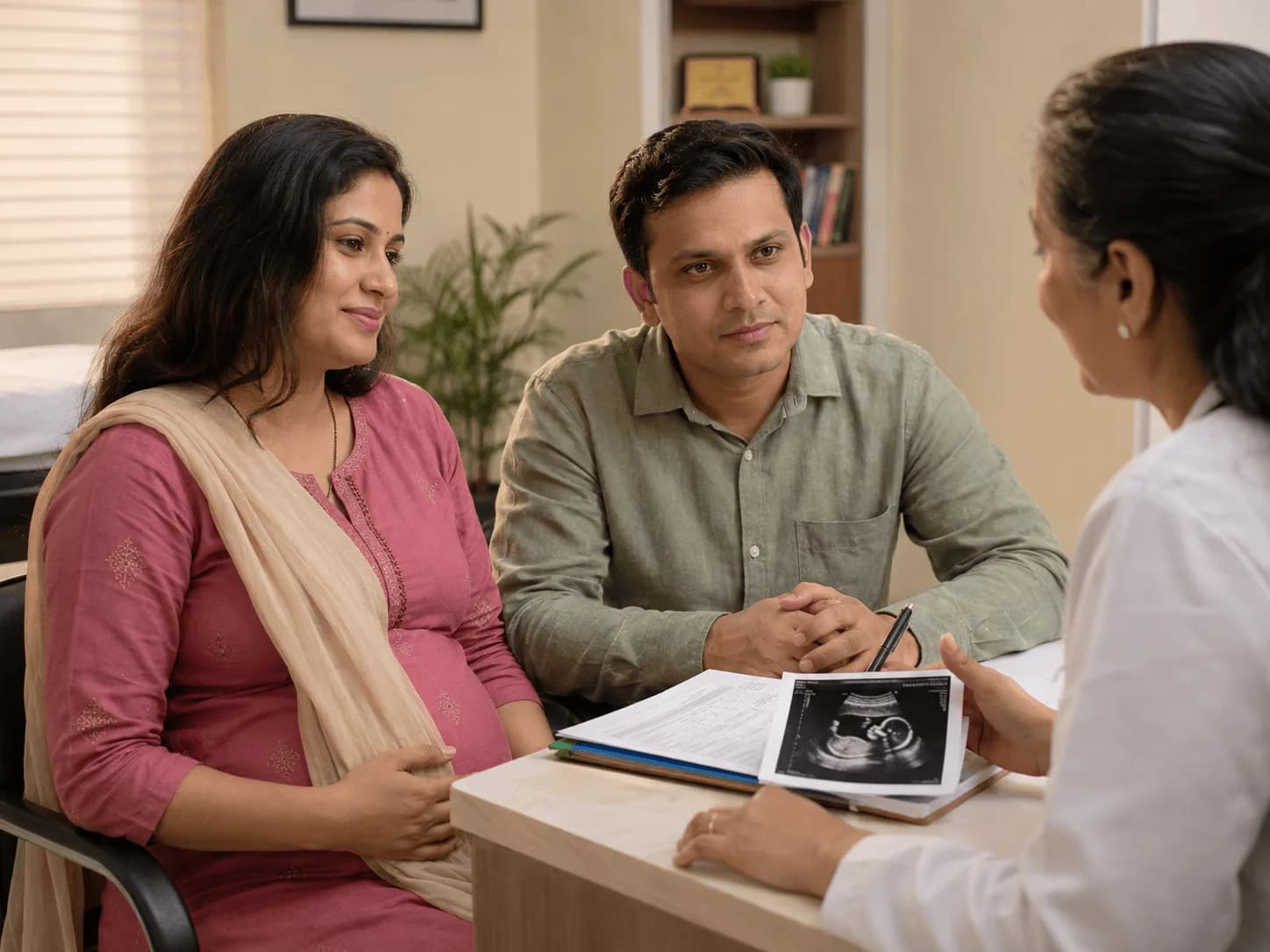
Choose a team that values normal delivery. Ask your gynaecologist directly how they approach the decision. Honest gynecologist advice on delivery works best when it is given across your antenatal months. One rushed talk at the end is not enough. Advice built up over time is the strongest sign of a decision you will trust.
Prepare your body and your mind together. Antenatal breathing and birth-preparation sessions, where available, reduce fear of labour. And fear itself slows labour measurably. Decide early who your birth companion will be. A calm, familiar face in the labour room is one of the simplest proven supports for normal delivery.
Keep an open mind. Rigid birth plans crack under real labour. The goal is a healthy mother holding a healthy baby - by whichever door.
C-section recovery: what to honestly expect
If you do need a caesarean, c-section recovery is measured in weeks, not days. Expect two to four days in hospital. The cut will feel sore for a couple of weeks, and medicines manage this well. Most normal activity returns by six weeks. Walk early - gently, from day one. It speeds everything: blood flow, bowel function, mood. Avoid heavy lifting for six weeks. Keep the wound clean and dry. Report fever, rising pain or discharge promptly.
Two reassurances are worth stating. First, breastfeeding works fine after a caesarean with a little help on positioning. Second, one caesarean does not mean all future deliveries must be caesareans. Many women safely try a normal delivery next time. This is called VBAC, and it is assessed case by case.
Delivery care at Memorial Hospital, Sonipat
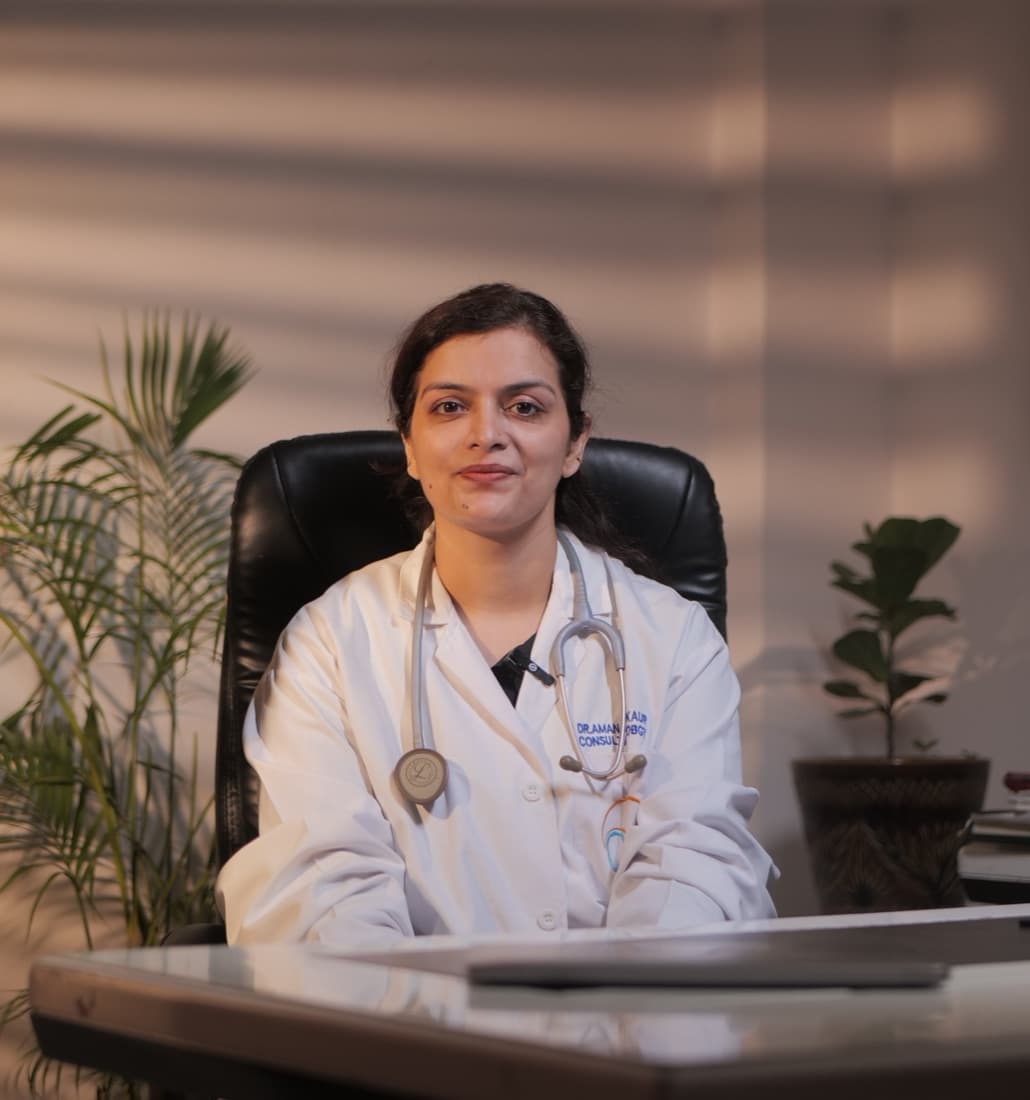
Deliveries at Memorial Hospital are led by Dr. Amandeep Kaur, MBBS, MD (Obstetrics & Gynaecology). She is an experienced lady gynaecologist whose OPD runs all seven days - Monday to Saturday 10 AM to 2 PM, Sunday 11 AM to 2 PM. The hospital supports both routes fully. Labour care is oriented toward safe normal delivery. A 24×7 operation theatre and anaesthesia team stand ready for planned or emergency caesareans. And a NICU is on site. So a newborn who needs extra support is treated at once, under the same roof as the mother.
Frequently asked questions
Is normal delivery possible after one C-section?
Often, yes. It is called VBAC (vaginal birth after caesarean). Whether it suits you depends on why the first caesarean happened, the type of scar on the womb, and this pregnancy's own picture. It needs a hospital with immediate operation-theatre backup. That is exactly the setting where it is safest to try.
Which is safer - normal delivery or C-section?
Whichever your medical situation calls for. In a straightforward pregnancy, normal delivery is safer and recovery is far quicker. When specific complications exist, a caesarean is by far the safer route. The real safety lies in honest assessment and a hospital equipped for both, whatever labour brings.
How long does C-section recovery take?
Typically two to four days in hospital and around six weeks to full normal activity. Gentle walking starts within a day. Most daily tasks return within two to three weeks. Heavy lifting waits until six weeks. Report fever, rising pain or wound discharge promptly.
Can I simply choose a C-section without a medical reason?
You can request one, and a good gynaecologist will hear you out. Fear of labour pain deserves a real conversation, not dismissal. But surgery carries its own risks and affects future pregnancies. So the decision should follow honest counselling about both routes, not replace it. Pregnancies flagged as high-risk are planned differently again.
Talk it through early
The best delivery decisions are made across nine months, not in the ninth hour. Book an antenatal consultation - OPD runs daily, including Sunday 11 AM to 2 PM. Build a delivery plan you understand and trust. This article is general information and not a substitute for a consultation.
Medically reviewed by Dr. Amandeep Kaur, MBBS, MD (Obstetrics & Gynaecology), Memorial Hospital, Sonipat.
Related specialty: Obstetrics & Gynaecology
Editorial note: This article is for general information and is not a substitute for personal medical advice. Please consult a qualified doctor about your specific symptoms. Last updated on 27 August 2026.